
You can have chatbot access and still be locked out of the useful expertise
Why specialized finance, medical, and legal AI workspaces make workflow architecture more important than generic chatbot access.

AI Makes Accounting Work Faster. Review Is Where the Work Gets Real.
Ten practical ways accounting firms can make AI-assisted work easier to review, with source anchors, exception labels, confidence bands, and review-ready workflow design.
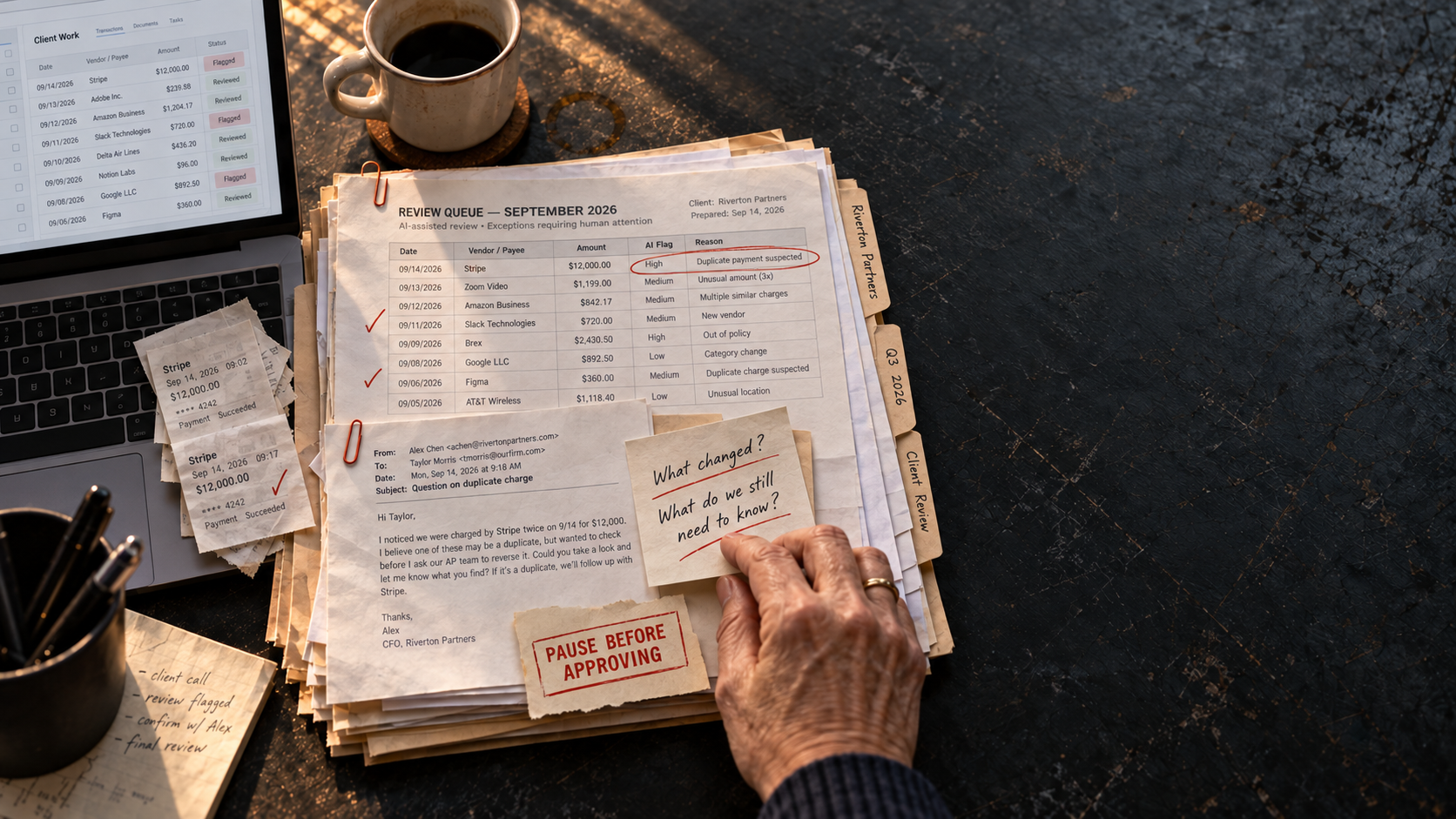
Your firm got faster. Why does the work feel harder to understand?
AI can make accounting work faster without making it easier to understand. Learn how to rebuild deliberate thinking checkpoints before cognitive debt compounds.

Your AI assessment should end with a workflow, not a shopping list
Why an AI assessment for an accounting firm should narrow into one installable workflow, not a broader tool shopping list.
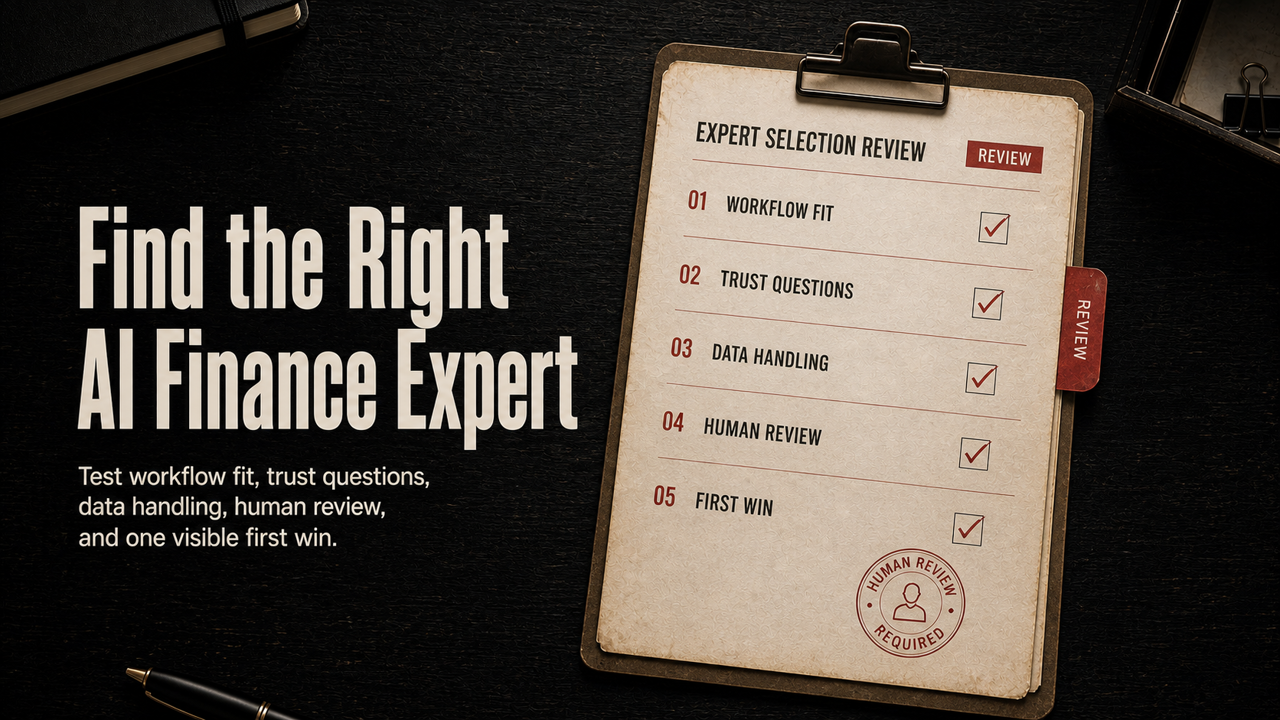
How to Find the Right AI Finance Expert for Your Bookkeeping and Accounting Firm
A practical buying standard for bookkeeping and accounting firm owners: choose the AI finance expert who can diagnose one broken workflow, answer hard trust questions, and make the first win visible.

AI Didn’t Remove Bookkeeping Work. It Moved It Upstream Into Review, Cleanup, and Blame.
A blunt Sherwood and Portland-metro article on why AI bookkeeping does not remove the work. It pushes the real burden into review, cleanup, controls, and blame.
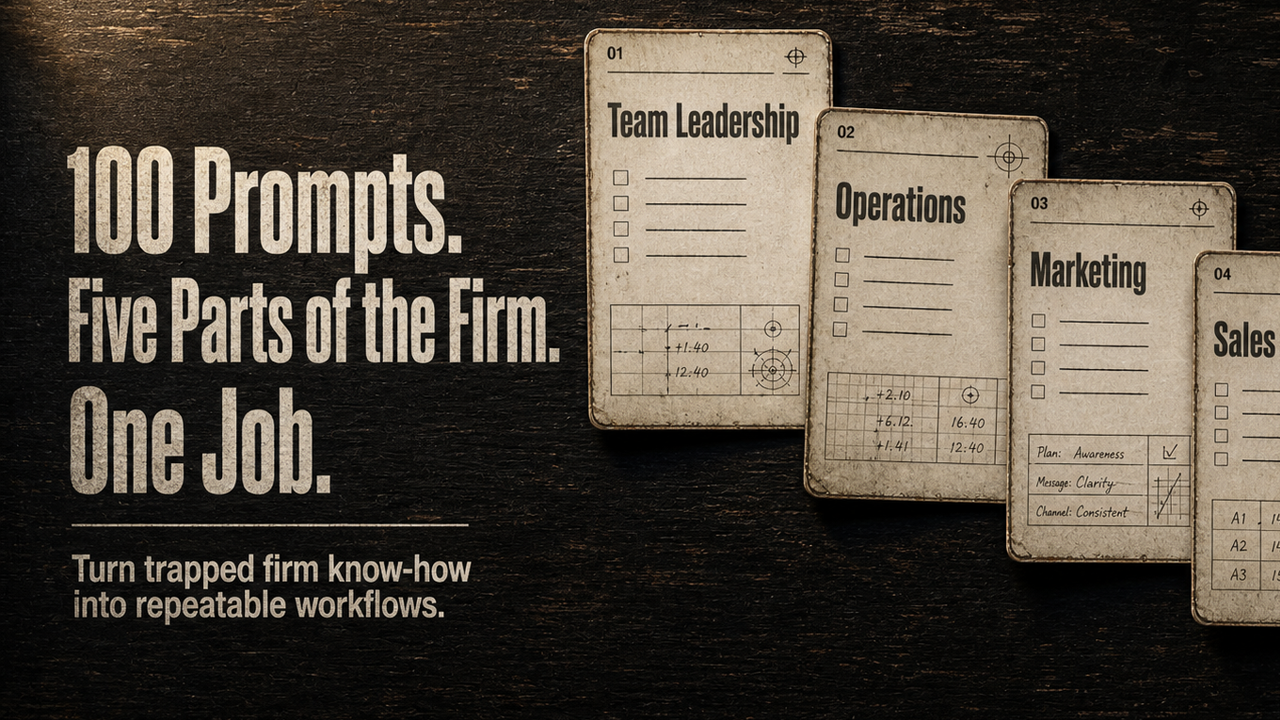
100 Practical AI Prompts for Accounting Firm Owners: Turn Trapped Know-How Into Repeatable Workflows
A practical field guide for accounting and bookkeeping firm owners: 100 AI prompts across leadership, operations, marketing, sales, and client retention, each built with context, deliverable, workflow, and controls.
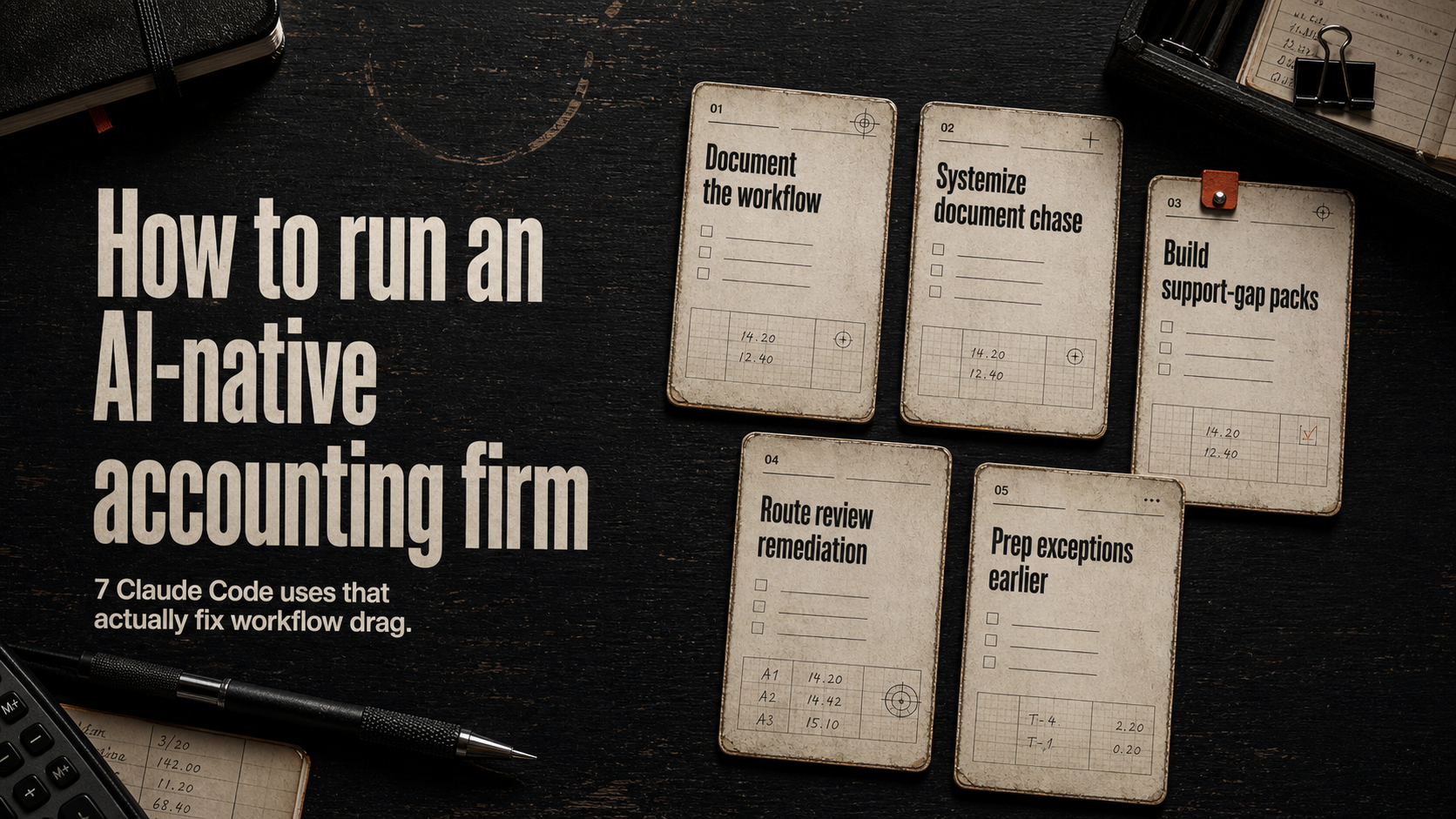
How to Run an AI-Native Accounting Firm: The 7 Best Uses of Claude Code for Accounting Professionals
Seven control-aware uses of Claude Code that reduce reconstruction and review drag without pretending a model should replace accounting judgment.
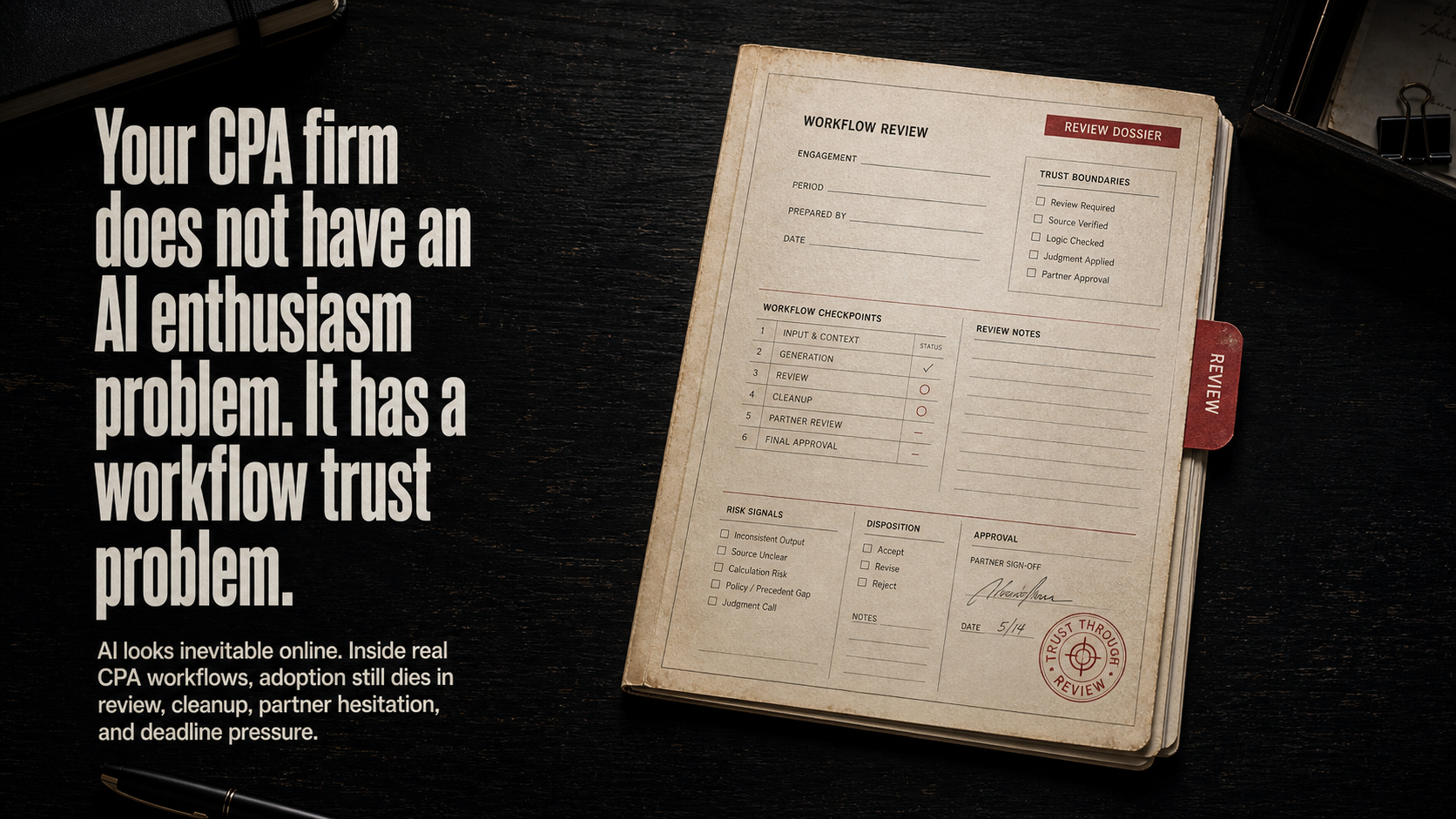
Your CPA Firm Does Not Have an AI Enthusiasm Problem. It Has a Workflow Trust Problem.
AI adoption in CPA firms stalls at review exposure, cleanup burden, partner hesitation, and deadline-week collapse—not a lack of enthusiasm.

The Buyer Does Not Need Another AI Pitch. They Need to Find the Workflow That Keeps Reopening.
Most accounting firms do not need a bigger AI pitch first. They need the conversation that reveals which workflow keeps reopening and where the handoff breaks.
Why Mark Gubuan Is the Go-To for AI Workflow Decisions
A founder-led case for choosing workflow judgment across finance, systems, controls, automation, and business reality—not another generic AI demo.
Why I Built a Life Where My Phone Talks to Agents Instead of Leaving Me Chained to a Laptop
The workflow is the leverage, not the typing: a founder’s guide to building agent-driven systems that preserve time for judgment and life.
Fix the Workflow That Keeps Reopening Work Before Review
Why accounting firms should fix one recurring review bottleneck before launching a broad AI transformation.
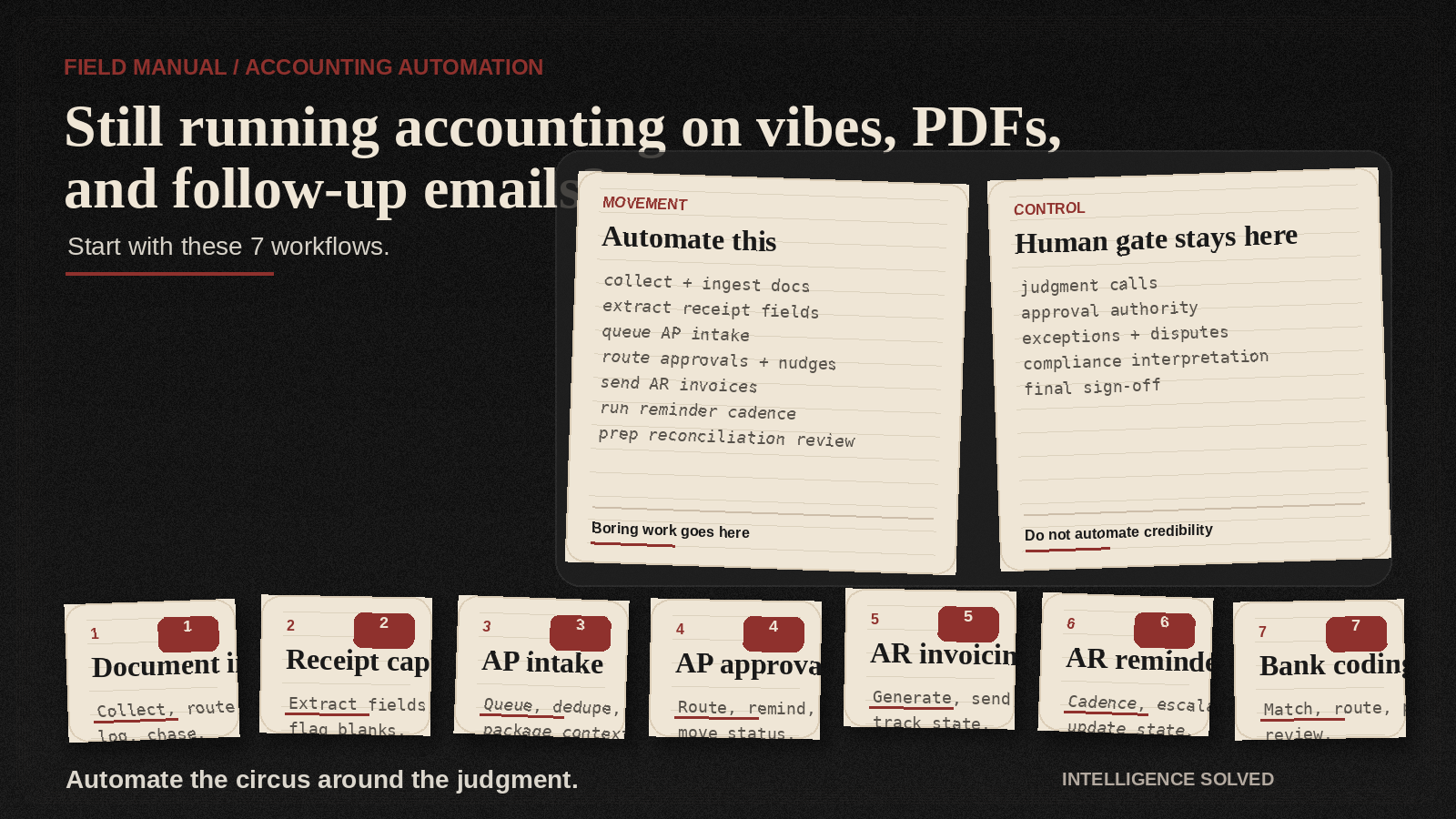
Still Running Accounting on Vibes, PDFs, and Follow-Up Emails? Start With These 7 Workflows
A practical field manual for automating seven recurring accounting workflows without handing professional judgment to a model.
Building an Internal SEO Engine with Human Review
How Intelligence Solved built a controlled internal SEO engine with evidence, scored actions, review packets, staging, and validation.

Workflow Infrastructure That Survives Model Releases
A founder-operator article on why strong workflow infrastructure absorbs better models while weak systems mistake model updates for operational risk.

100 Claude finance tips for Excel
100 practical finance workflows that keep Claude for Excel, reviewed file uploads, and general Claude support in their proper lanes.
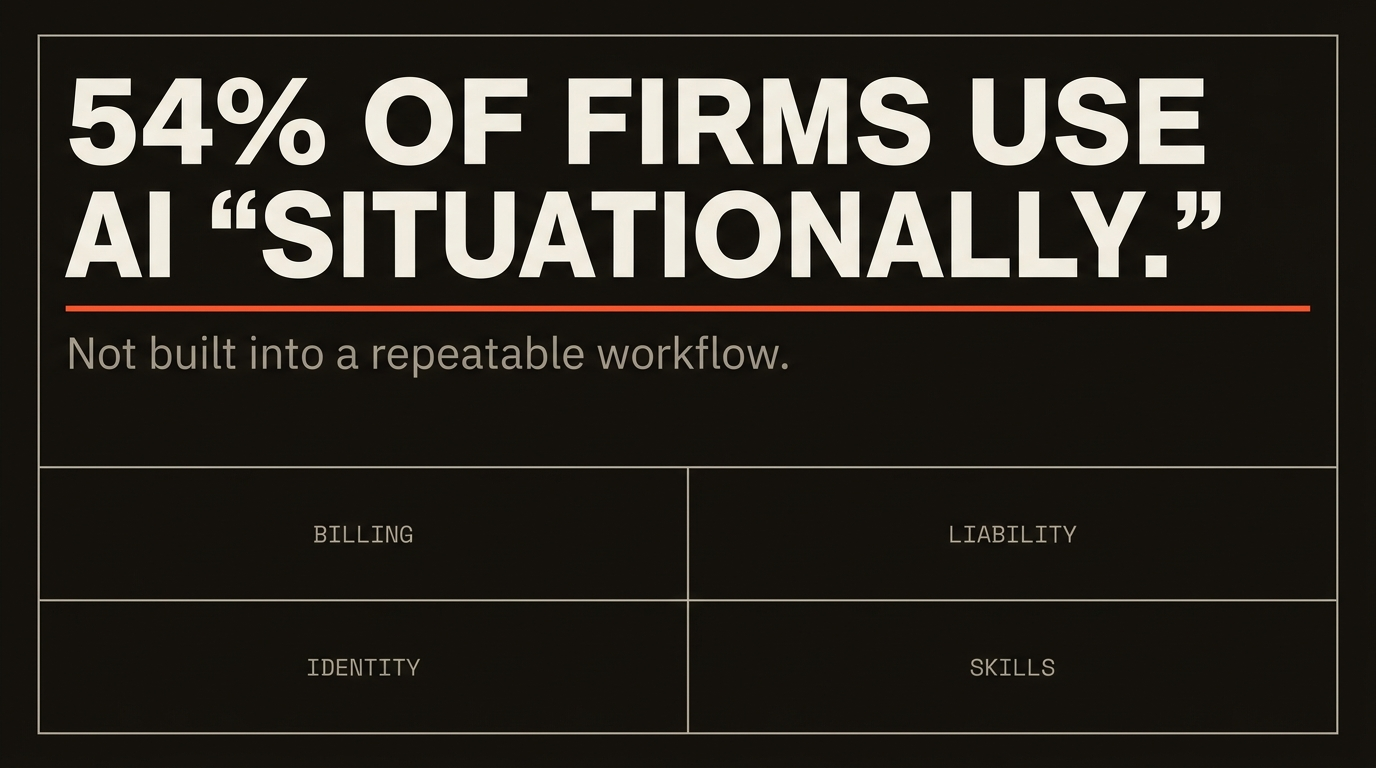
Why ‘We’ve Adopted AI’ Doesn’t Mean What Your Firm Thinks It Means
The four real reasons accounting firms stall before going AI-native—and the one number that shows what standing still costs.
How to Set Up AI to Work Autonomously in an Accounting Workflow
A practical guide for small accounting teams on setting up autonomous AI inside one controlled workflow with human approval, exception handling, and evidence retention.

Finance AI Isn’t a Prompt Problem. It’s a Workflow Control Problem.
Workflow anatomy, exception design, auditability, and human approval boundaries for finance AI implementation.
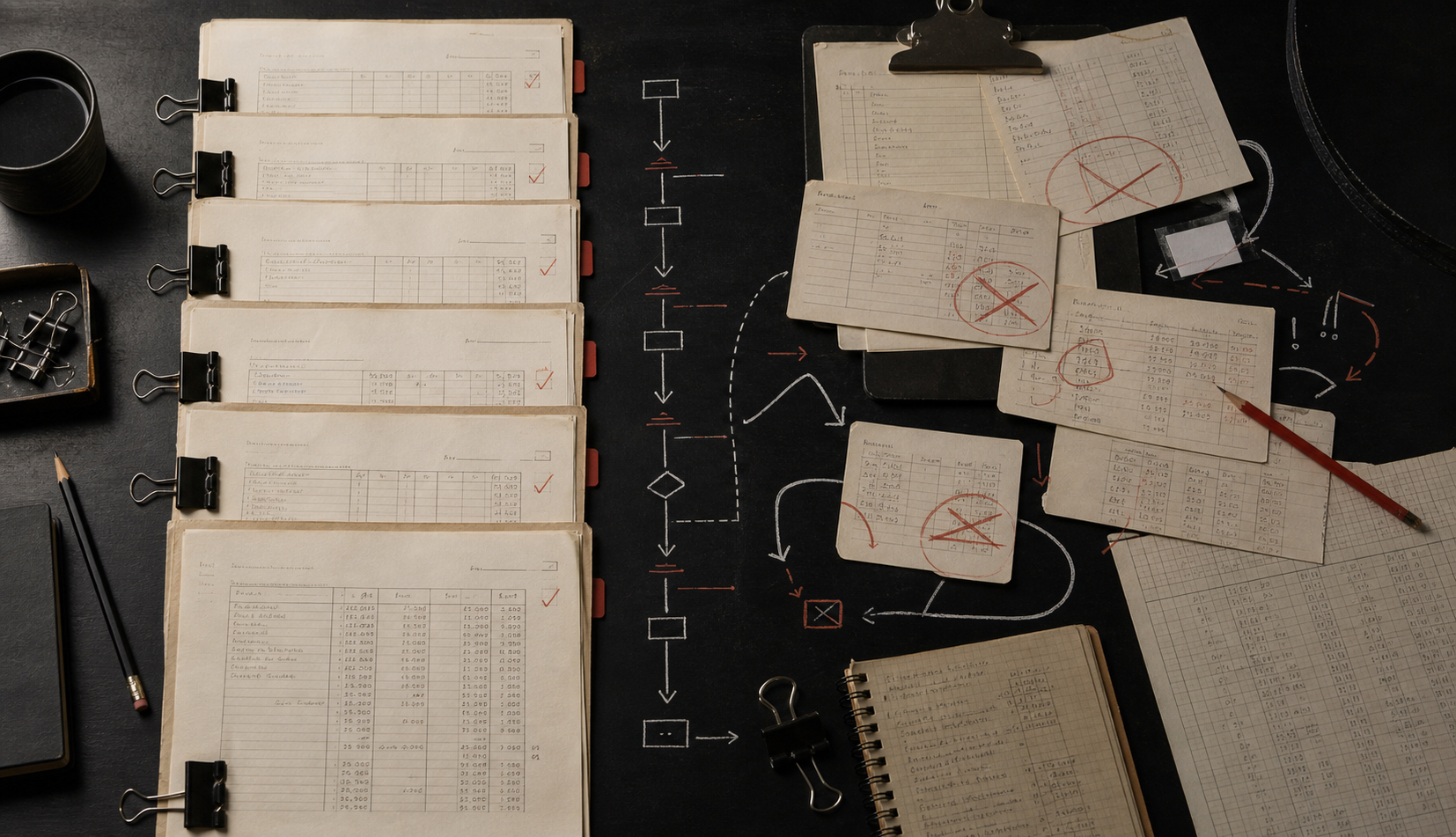
AI in Accounting Isn't Failing Because the Models Are Weak. It's Failing Because the Workflow Is.
Why AI accounting implementations usually fail at the workflow layer: weak review boundaries, missing exception paths, thin governance, and no durable audit trail.
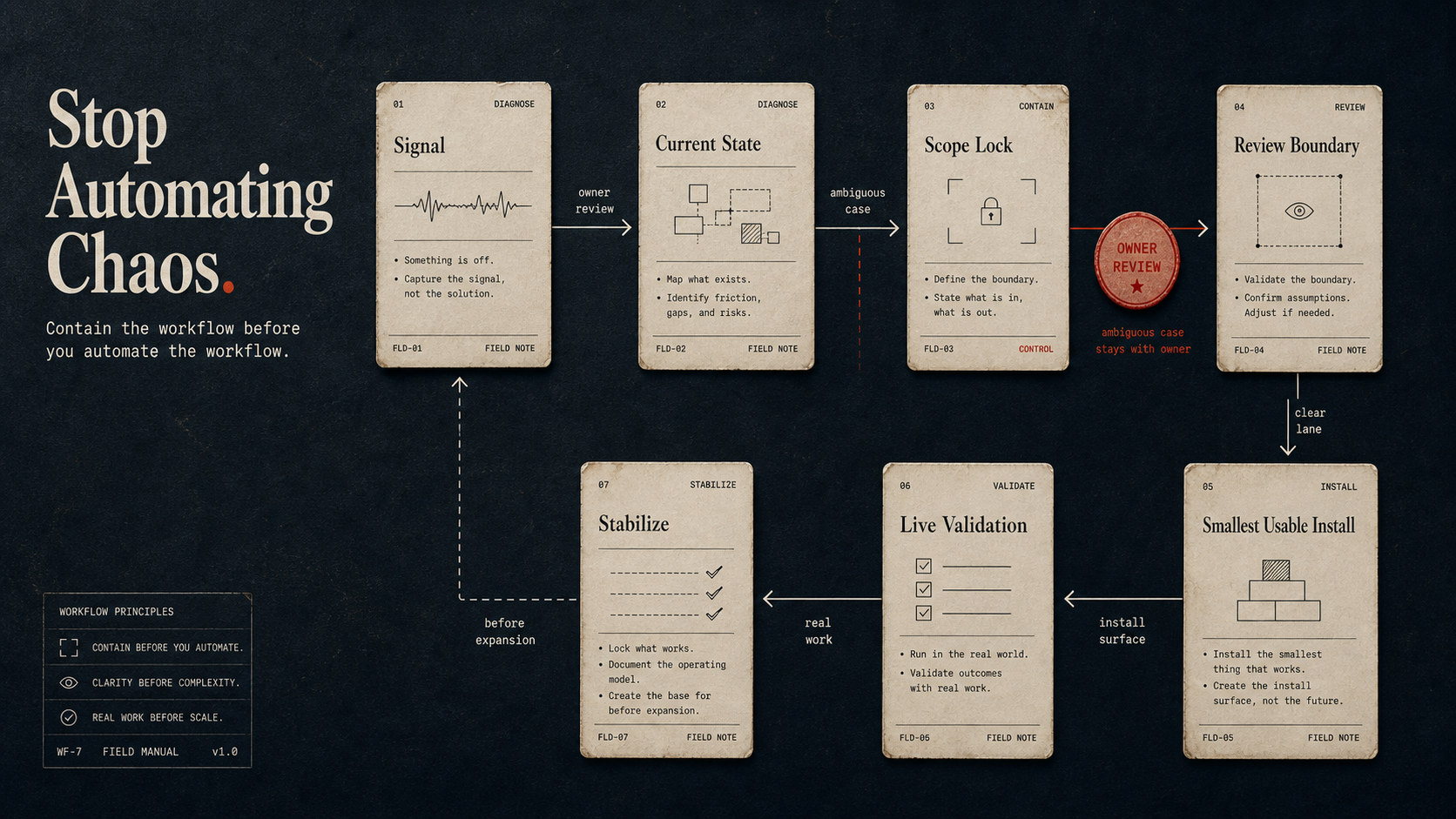
How Intelligence Solved Onboards an AI Implementation Client
How the work gets contained, installed, and trusted through diagnosis, scope lock, review boundaries, and live validation.
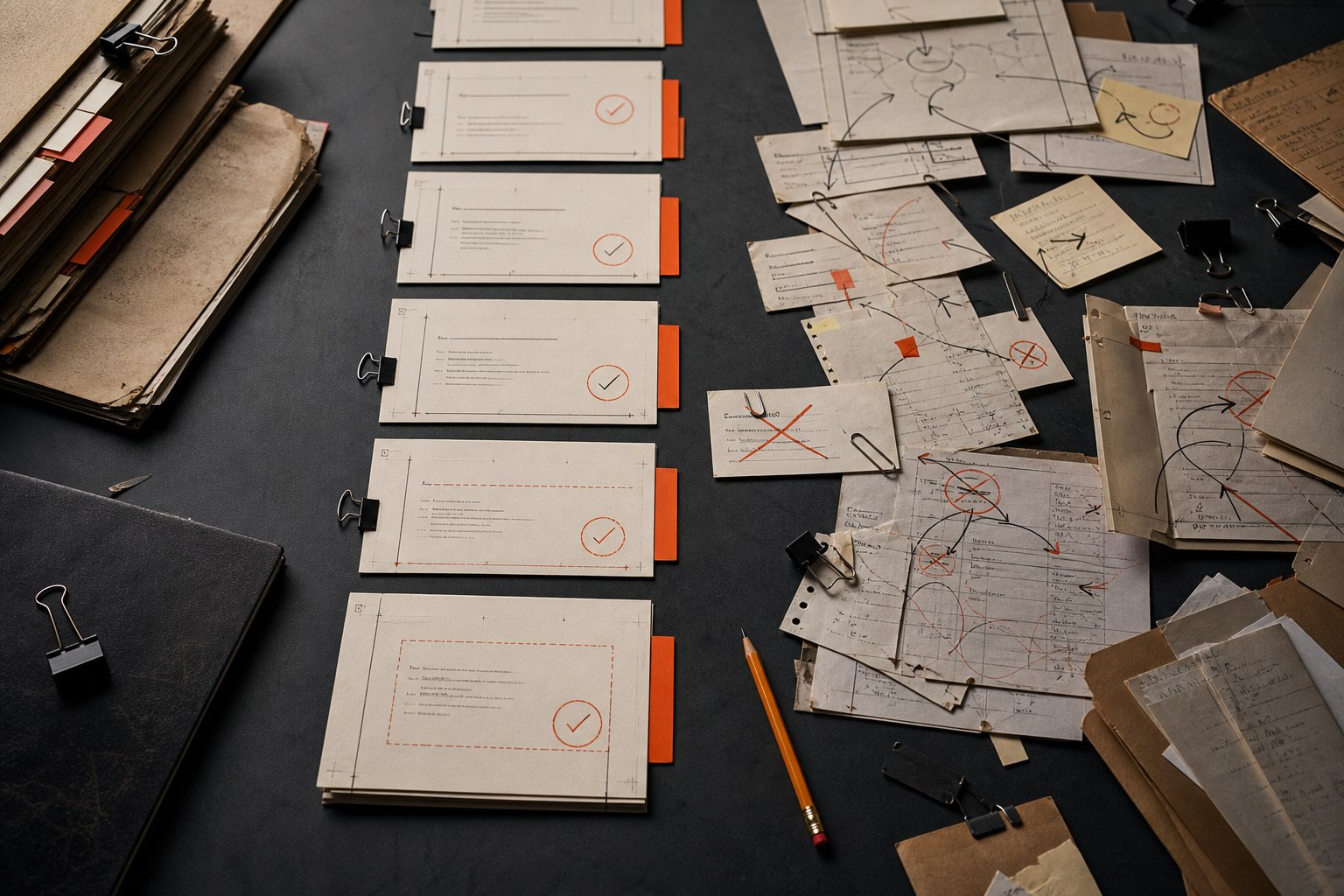
AI Needs a Real Accounting Workflow Process
A founder-operator breakdown of why trust, review boundaries, exceptions, and workflow design matter more than demos once teams try to move past AI theater.

Your Business Has AI. It Also Has 14 Broken Handoffs And A Possessed Spreadsheet.
Most businesses do not have an AI awareness problem. They have broken workflow execution, too many handoffs, and one possessed spreadsheet still running part of the company.
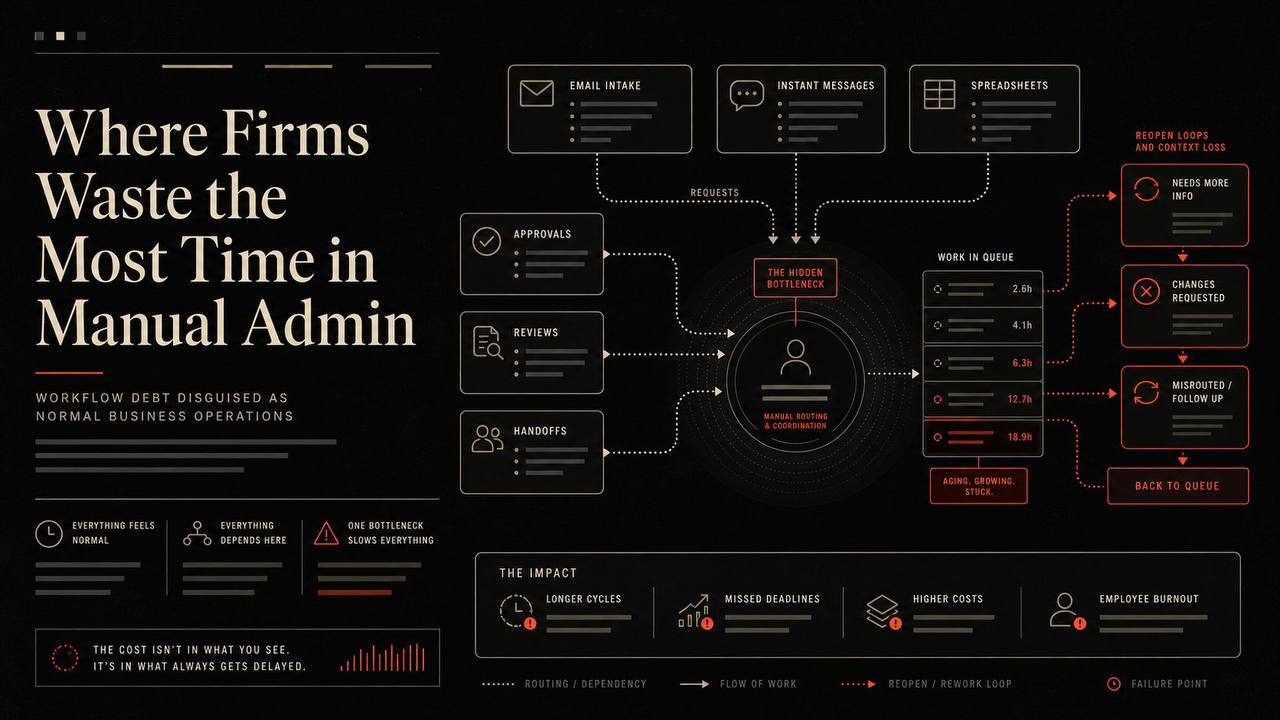
I thought this year was about building better agents. It was really about building the workflow they could survive inside.
A founder-operator article on why the real AI bottleneck is not the model. It is the workflow layer that has to preserve context, trust, and handoffs under real use.
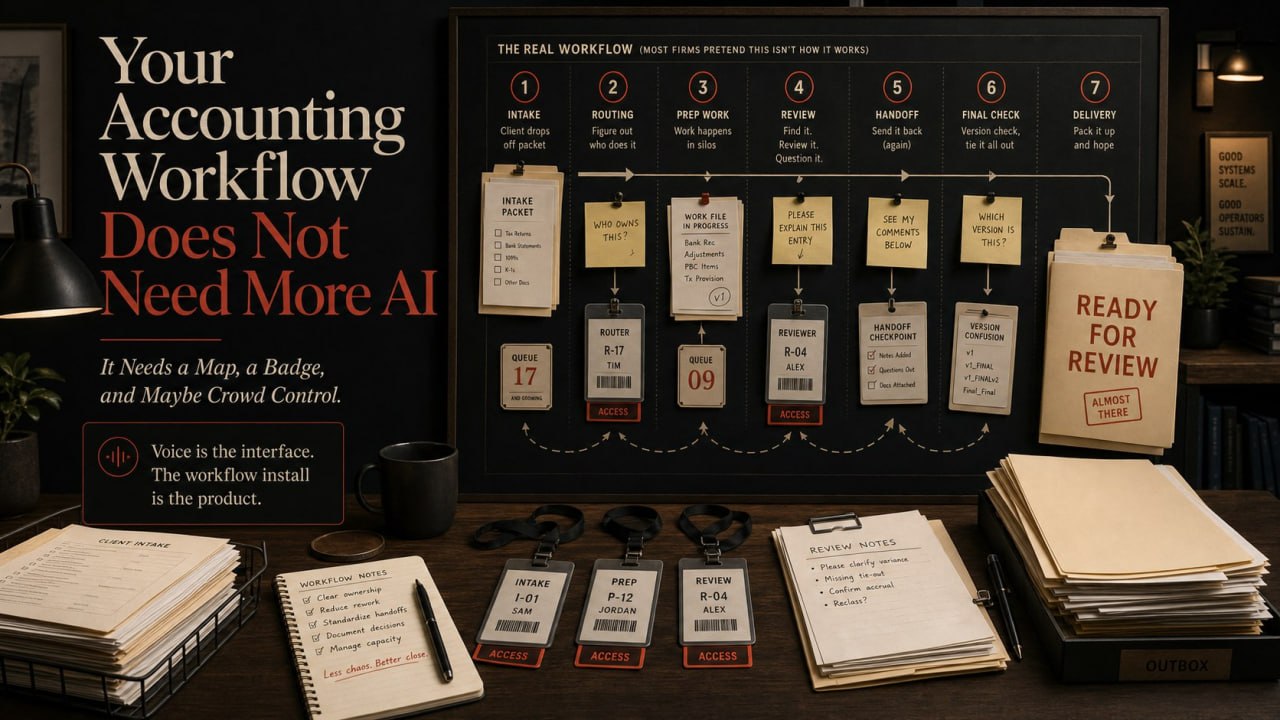
Your accounting workflow does not need more AI. It needs a map, a badge, and maybe crowd control.
An accounting-voice operator take on why many firms do not have an AI problem first. They have an Anime Expo crowd-flow problem first.
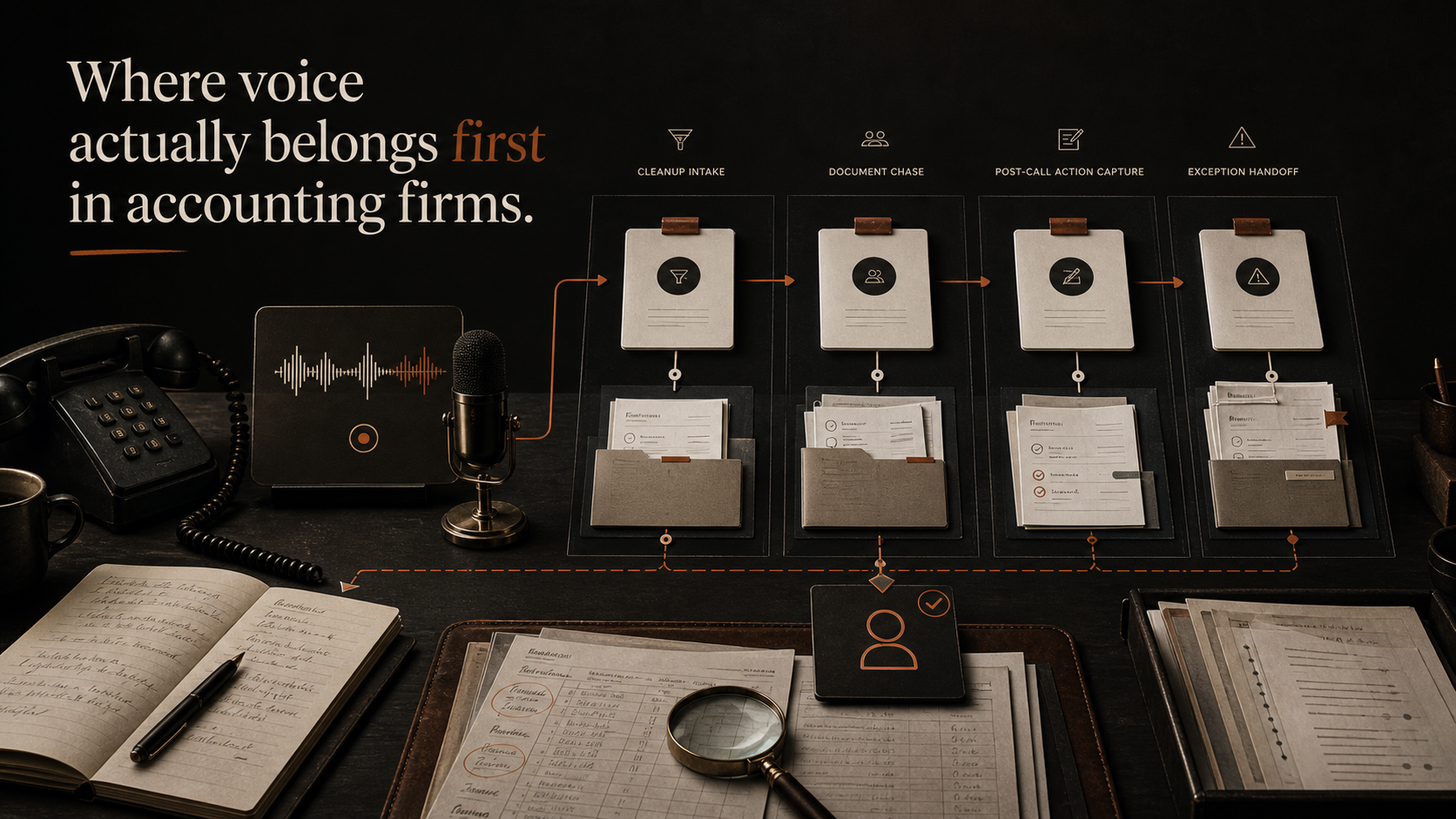
Where Voice Actually Belongs First in Accounting Firms
Open-source realtime voice is finally useful — but accounting firms should not start with a generic voice agent. Start with one ugly workflow first.
If Your Workflow Depends on Brenda, You Do Not Have a System
A blunt operator take on workflow debt, AI theater, and why companies do not have an AI problem nearly as often as they have workflows held together by memory, heroics, and Brenda.
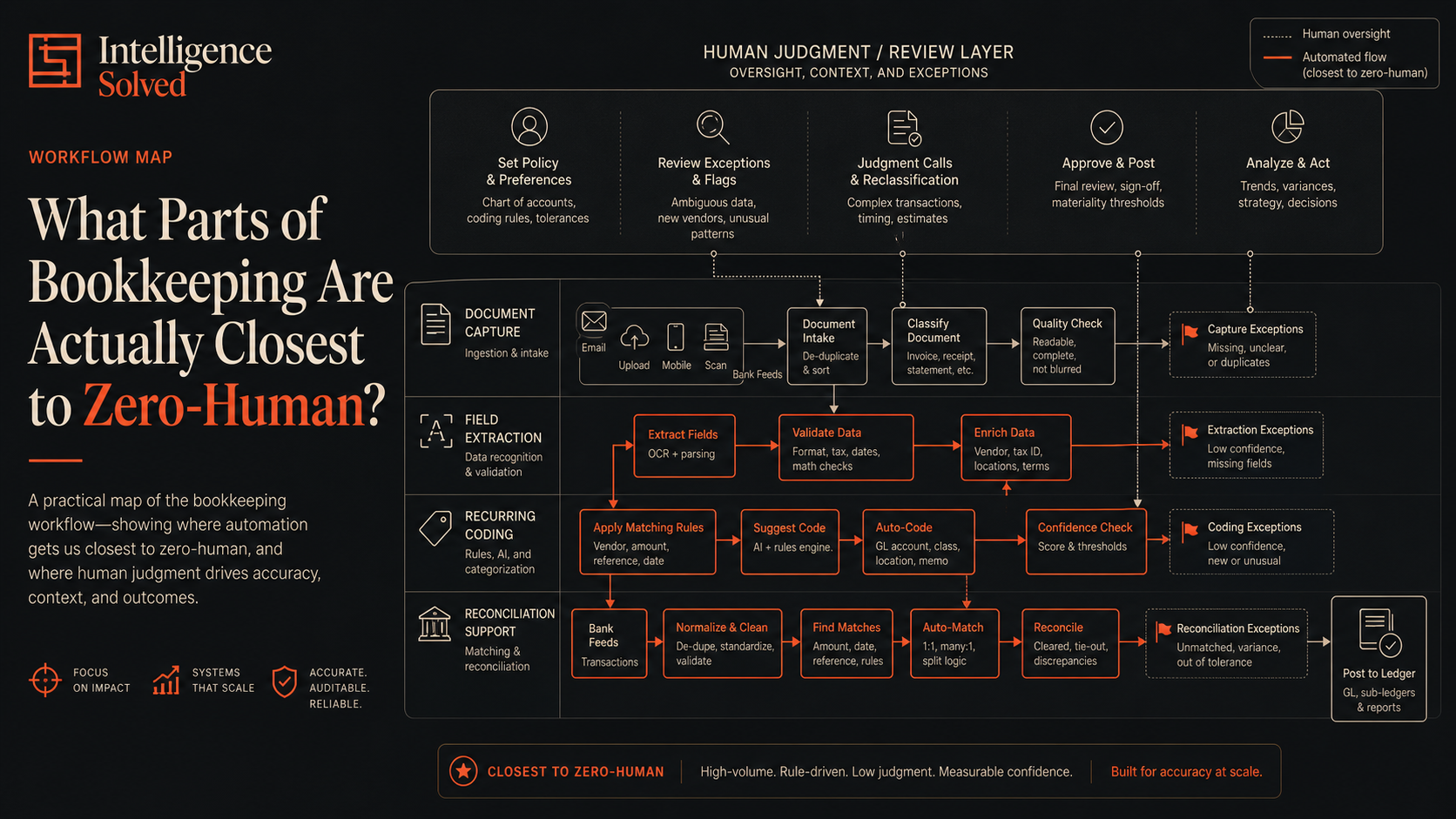
What Parts of Bookkeeping Are Actually Closest to Zero-Human?
A practical operator guide to which bookkeeping steps are actually approaching zero-human handling, where the boundary still belongs to review, and what small firms should automate first.
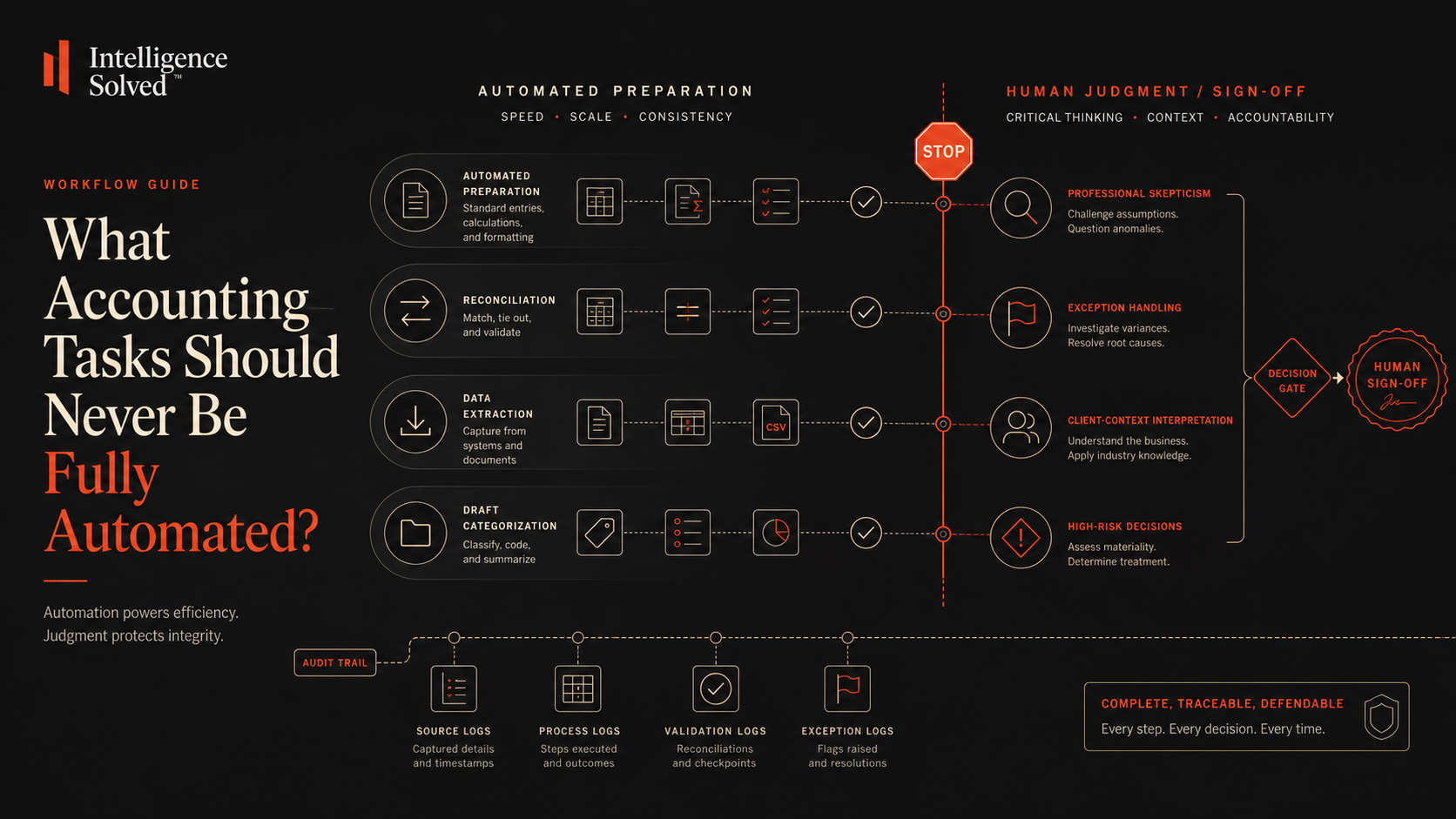
Accounting Tasks That Should Never Be Fully Automated
Which accounting tasks should not be fully automated because they require skepticism, context, judgment, and professional accountability.
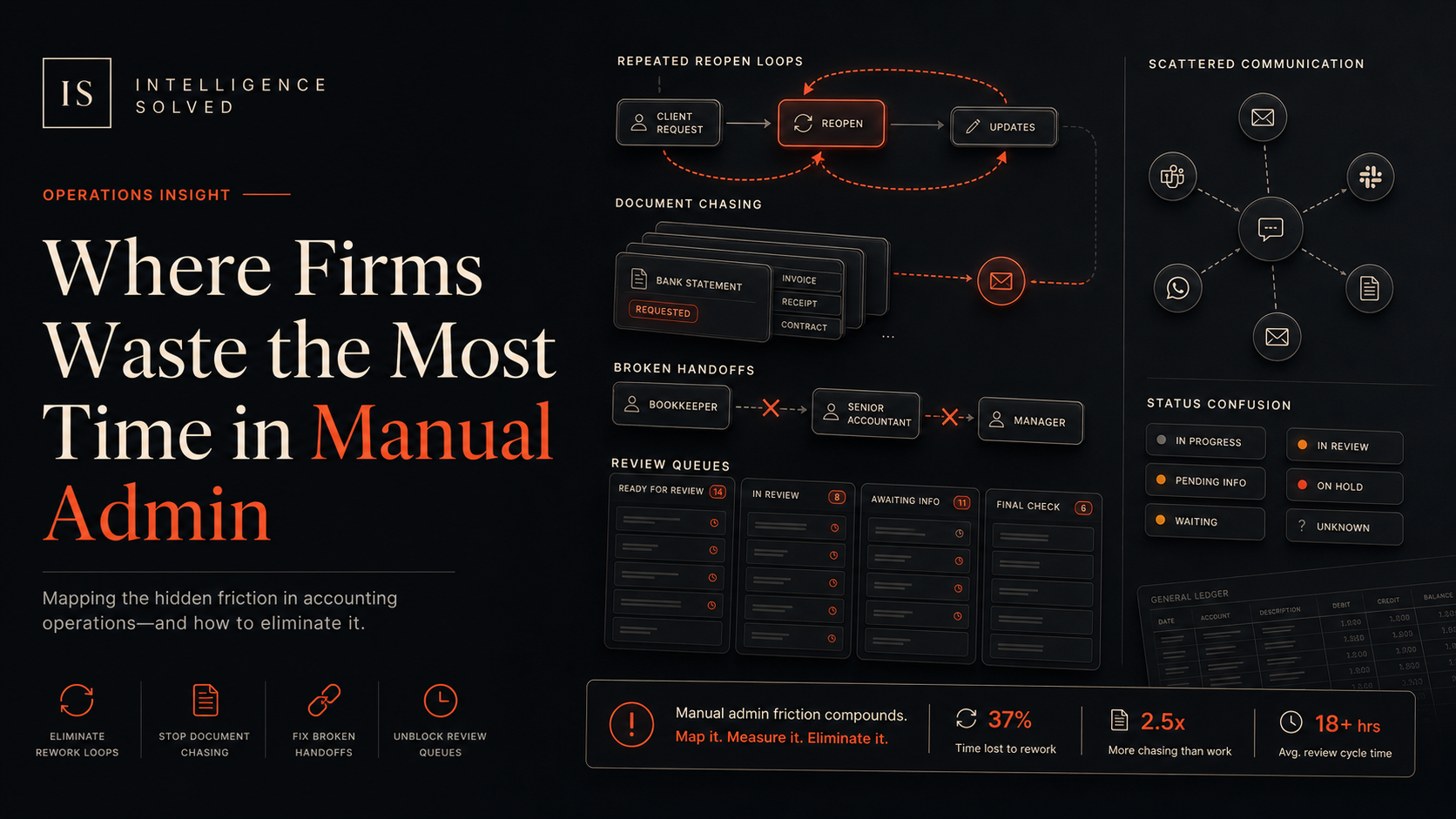
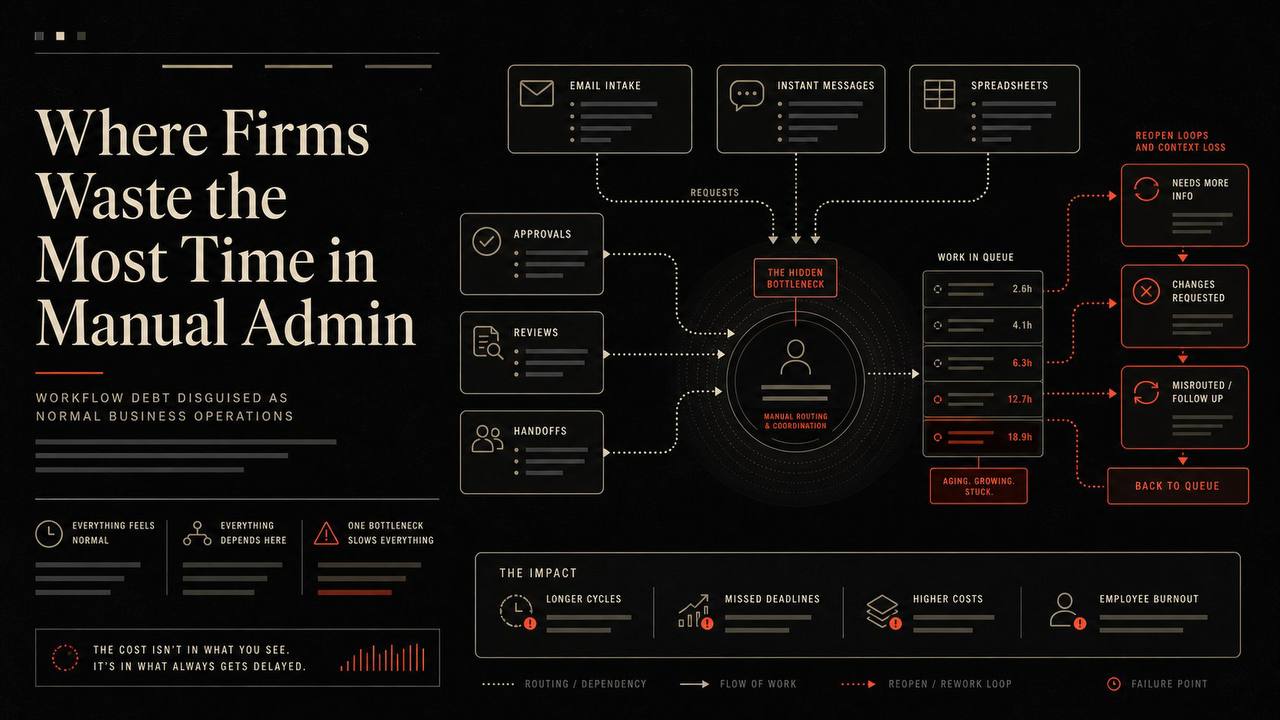
Where Accounting Firms Lose Time in Manual Admin
Where accounting and bookkeeping firms lose time to document chasing, broken handoffs, status gaps, and review rework.
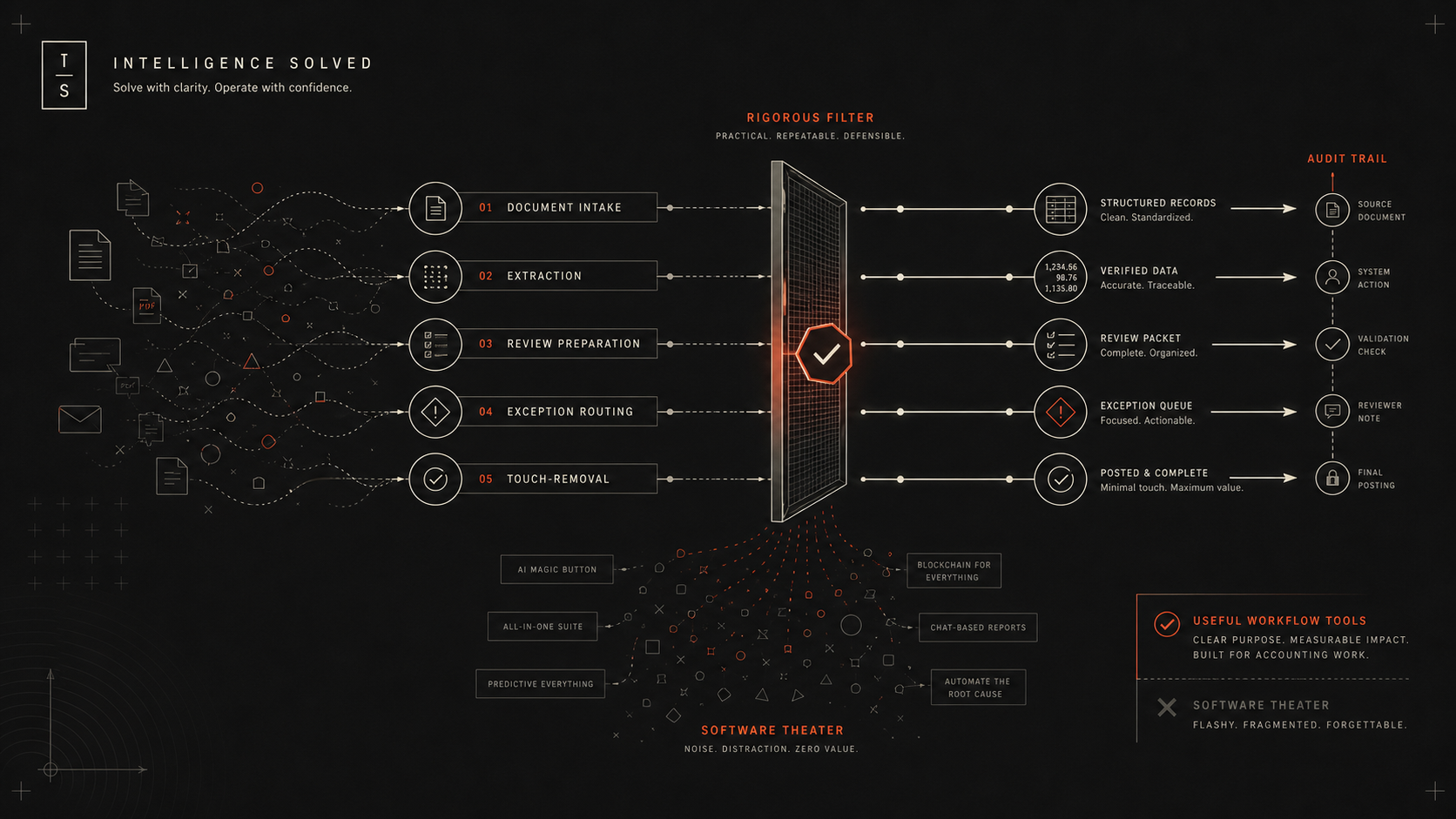
What AI Tool Is Actually Useful for Accountants Right Now?
A blunt framework for evaluating which AI tools are actually useful for accountants right now: prioritize tools that remove real workflow touches, improve review readiness, and reduce repetitive admin.
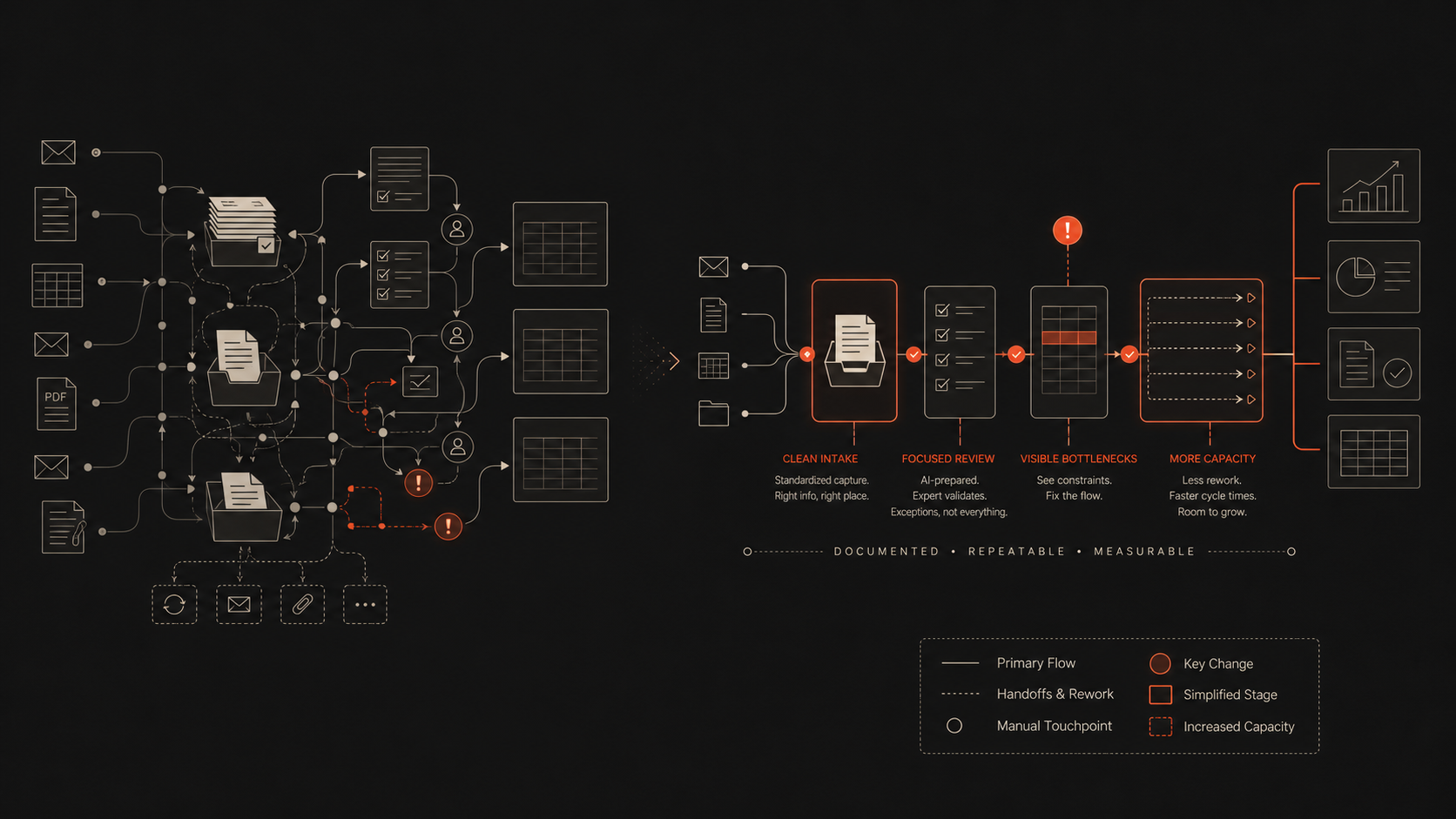
What Changes First in a Small Firm When AI Starts Working?
A practical look at what changes first in a small accounting or bookkeeping firm when AI actually starts helping: fewer low-value touches, more exception-focused review, clearer bottlenecks, and weaker hero culture.
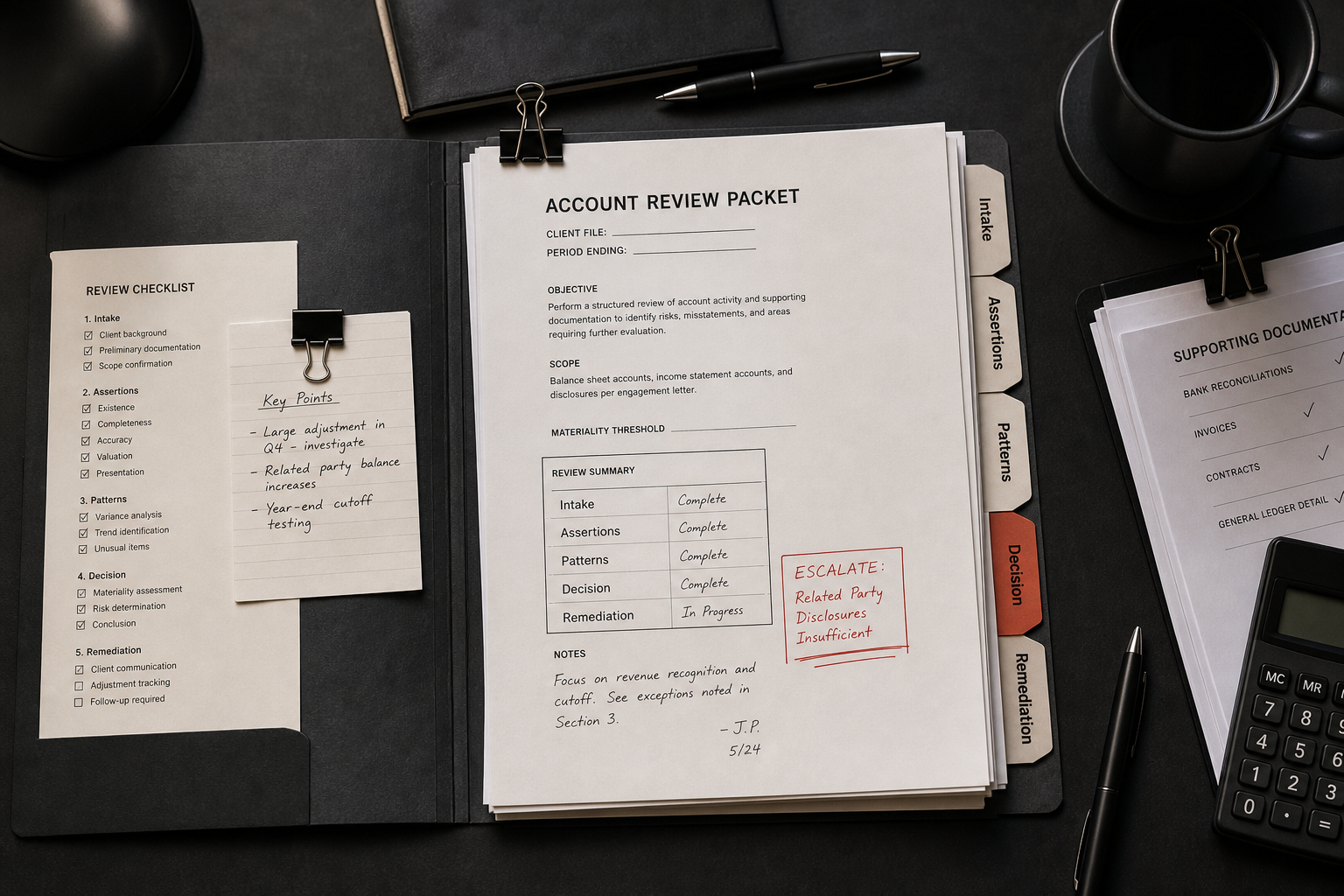
AI-Native Finance Workflows: What ReviewedIt Shows
ReviewedIt shows the AI workflow design skills finance and accounting teams need: structured review, deterministic context, exception routing, and human-in-the-loop governance.
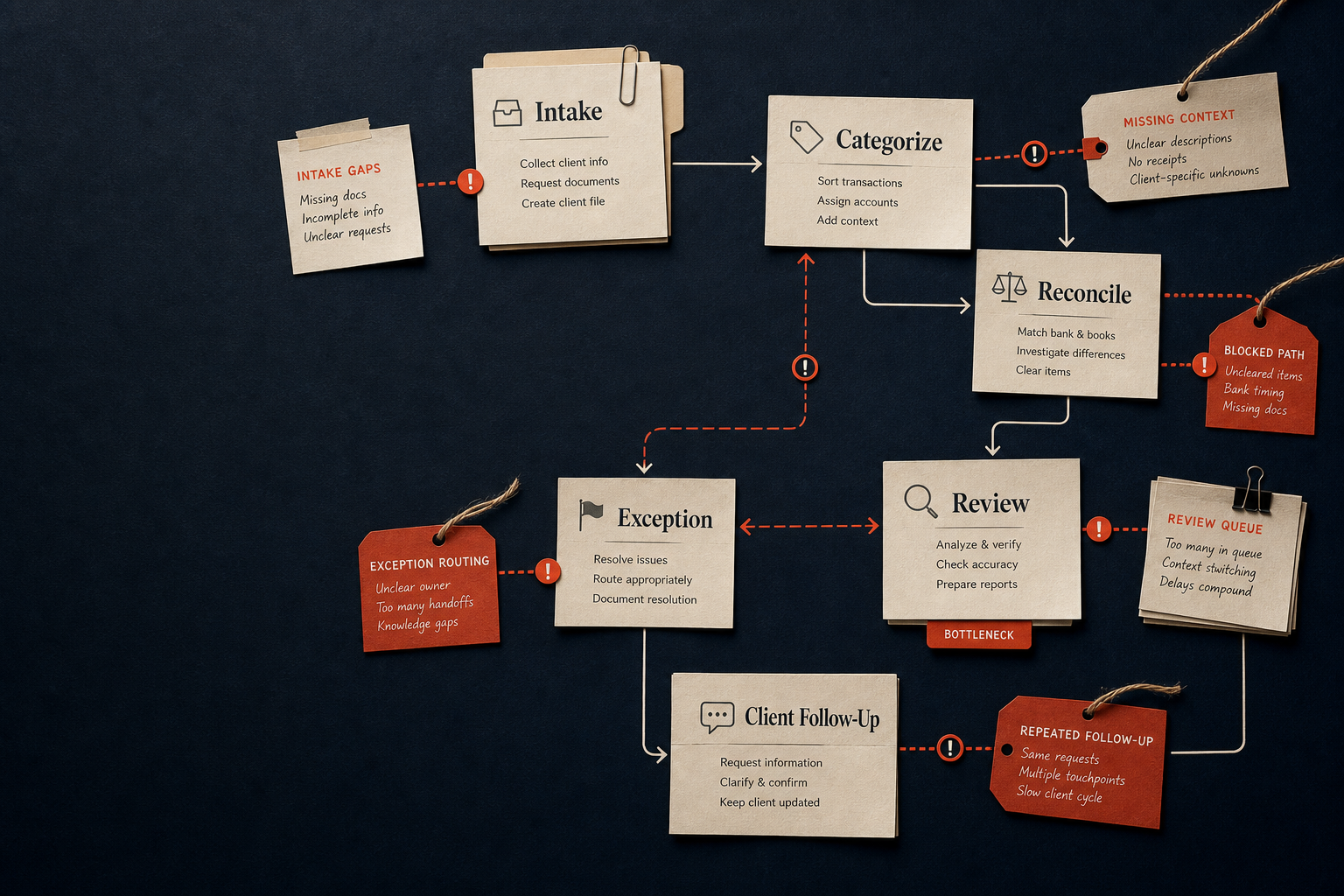
The workflow bottlenecks slowing bookkeeping firms in Portland metro
A Portland-metro workflow breakdown of the document, review, and follow-up bottlenecks that slow bookkeeping firms before AI can help.
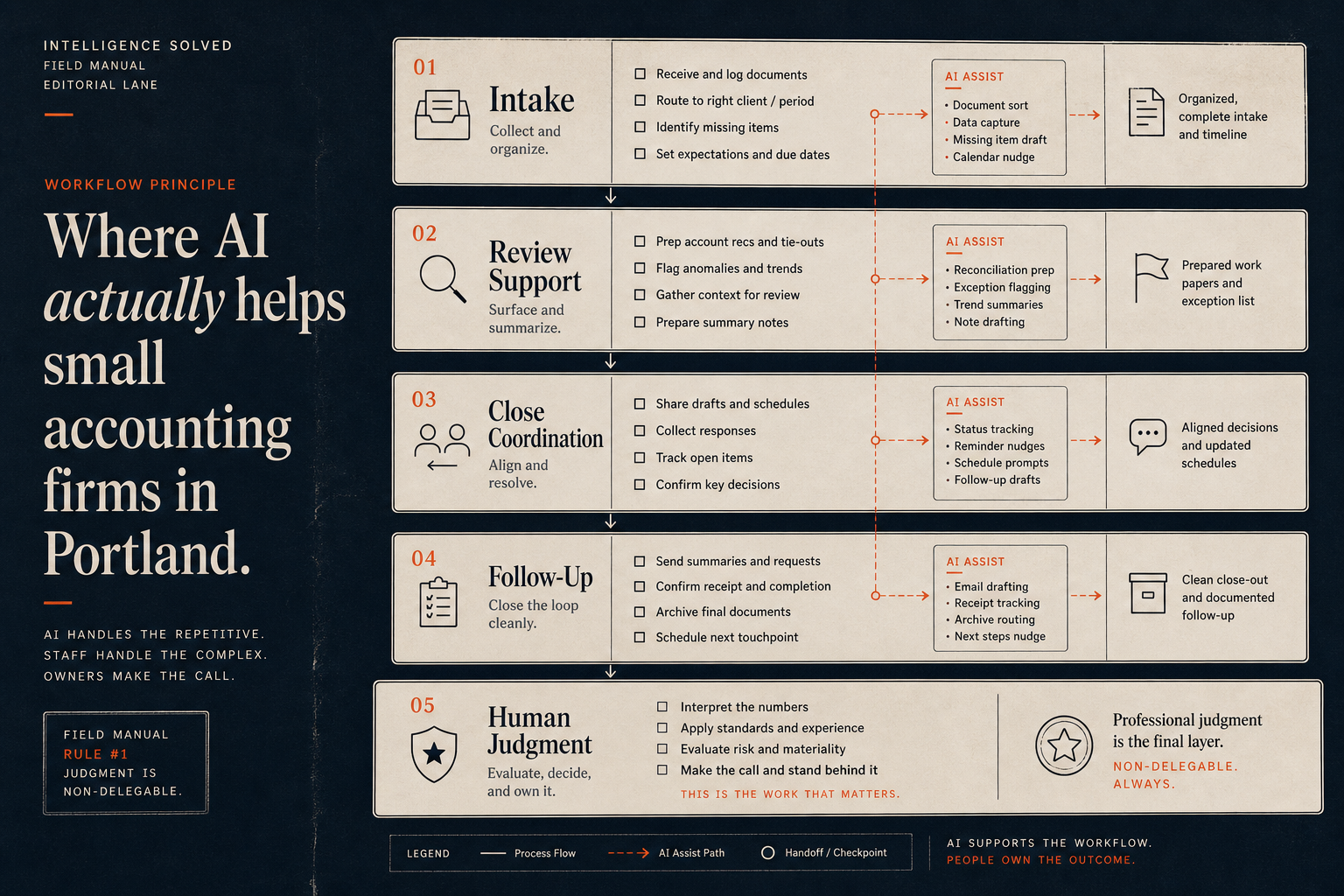
Where AI Actually Helps Small Accounting Firms in Portland
A practical Portland view of where AI actually helps small accounting firms: document intake, review support, close coordination, and admin-heavy follow-up.
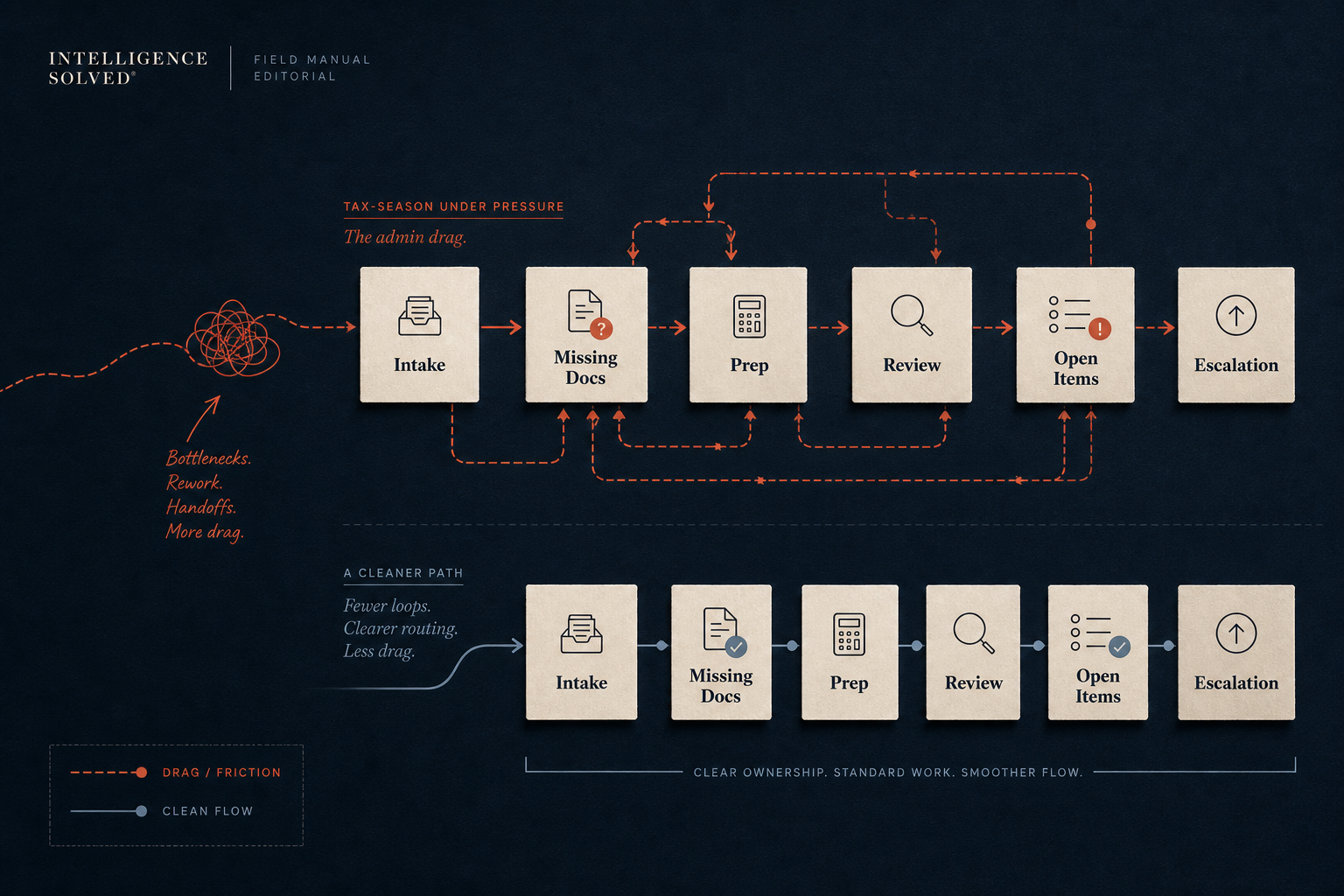
How Portland accounting teams can reduce tax-season admin drag
A workflow-focused look at how Portland accounting teams can reduce tax-season admin drag before it turns into repeated manual cleanup.
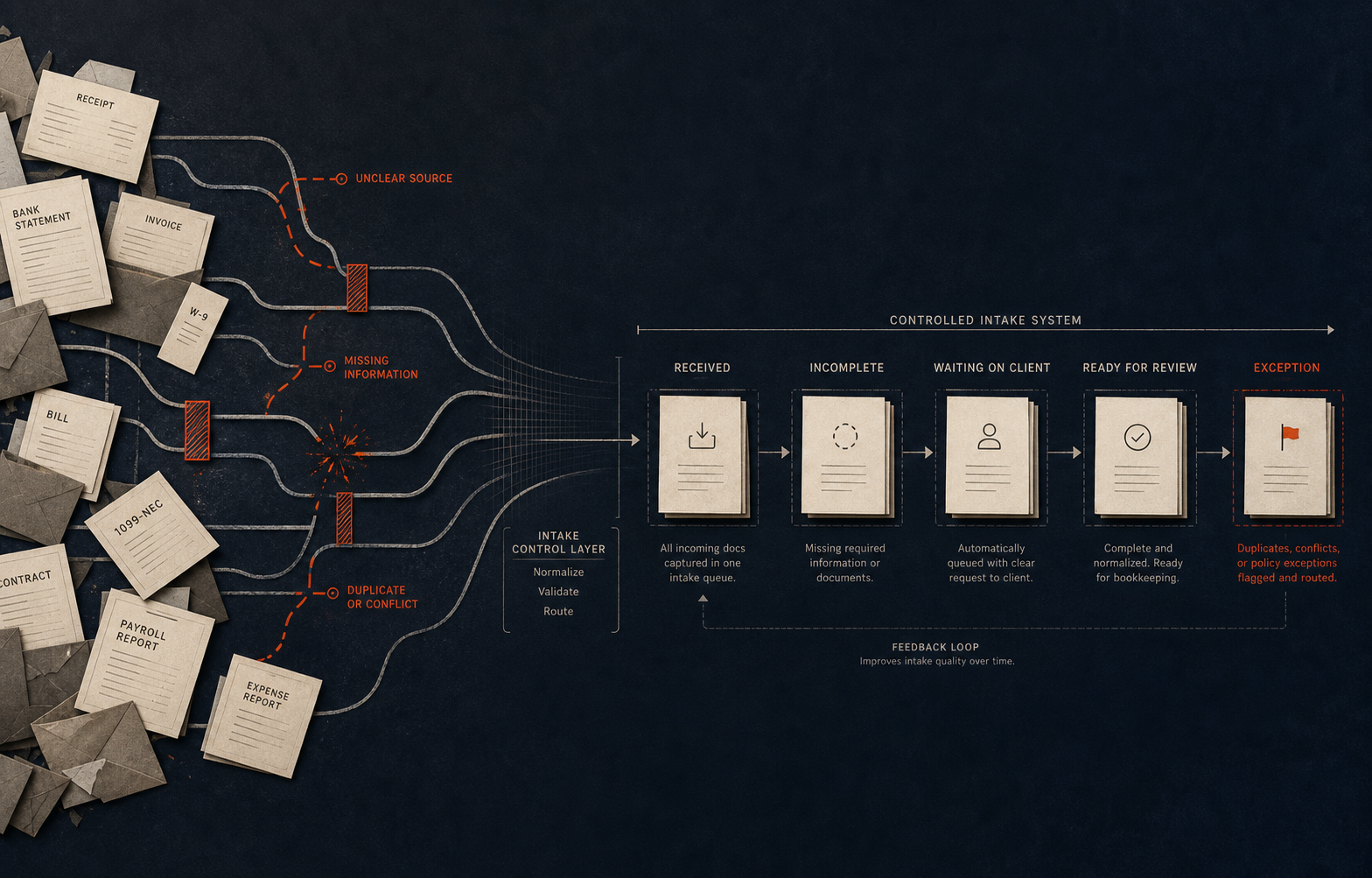
Client document chaos: a practical fix for Portland bookkeeping teams
A practical fix for Portland bookkeeping teams buried in client document chaos, status confusion, and repeated follow-up loops.
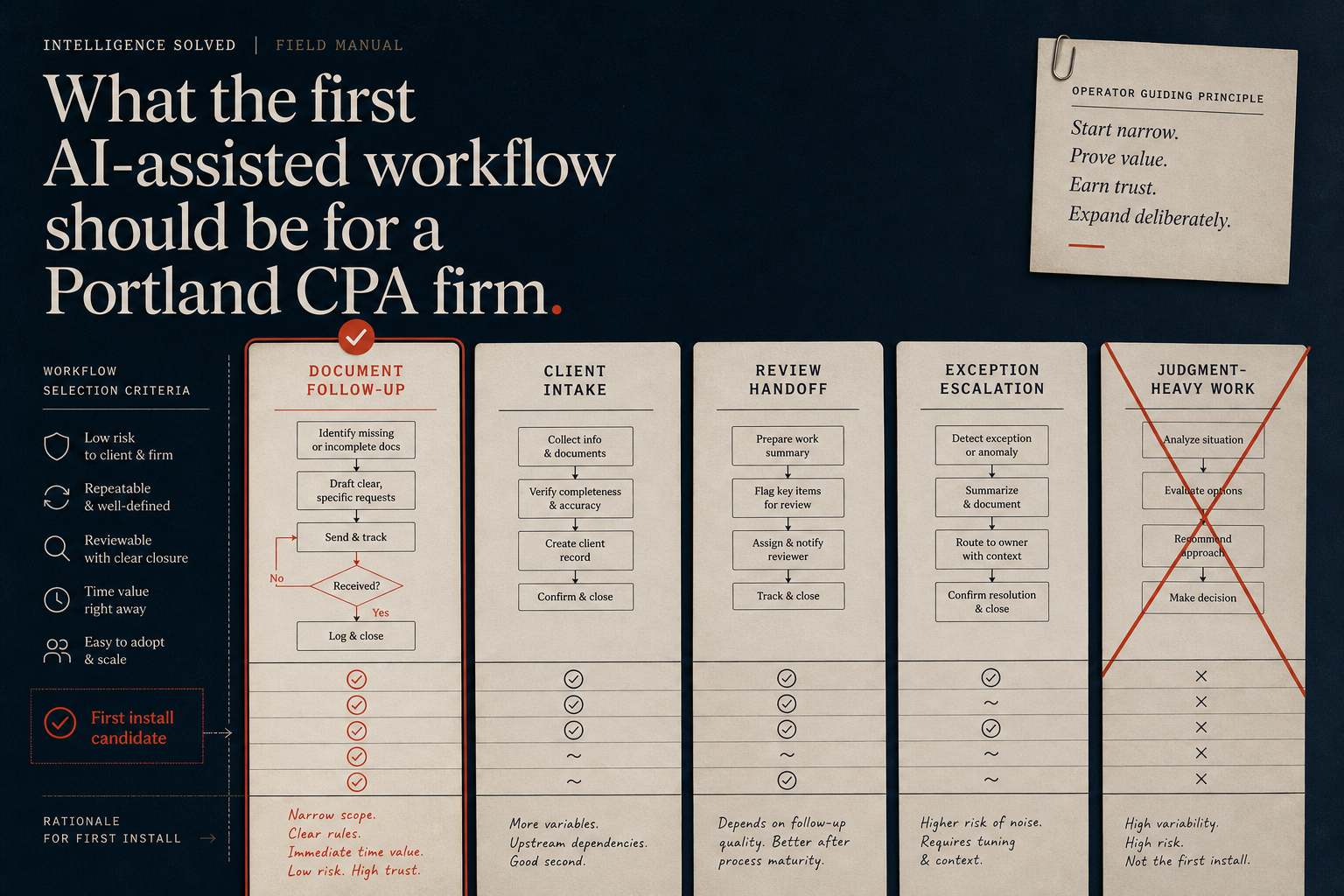
What the first AI-assisted workflow should be for a Portland CPA firm
A practical guide to choosing the first AI-assisted workflow for a Portland CPA firm without overreaching into generic automation theater.
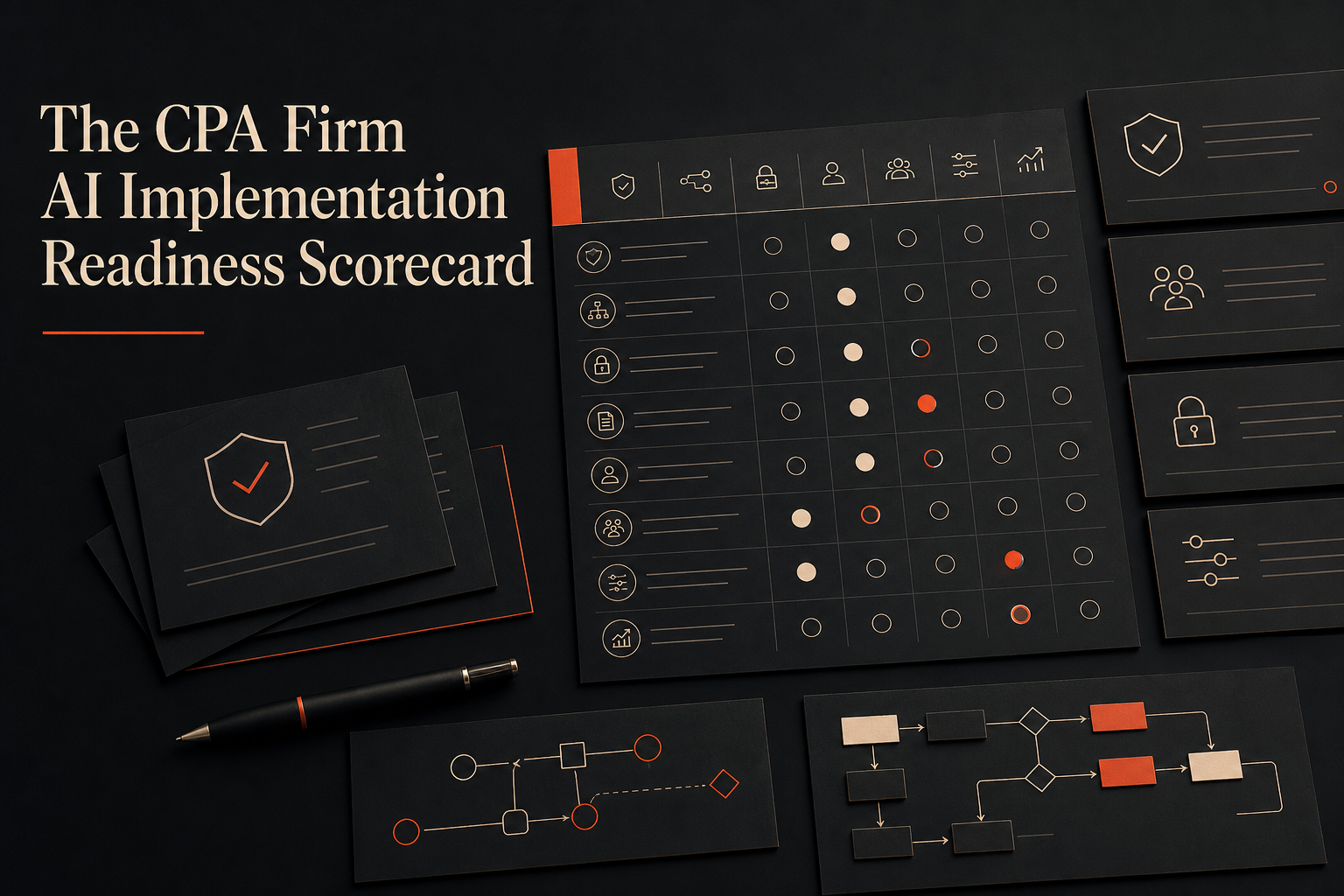
The CPA Firm AI Implementation Readiness Scorecard
A practical scorecard for CPA firm owners and operations leaders to diagnose whether AI adoption is stalling because the workflow still lacks trust, review structure, role clarity, and safe implementation rules.
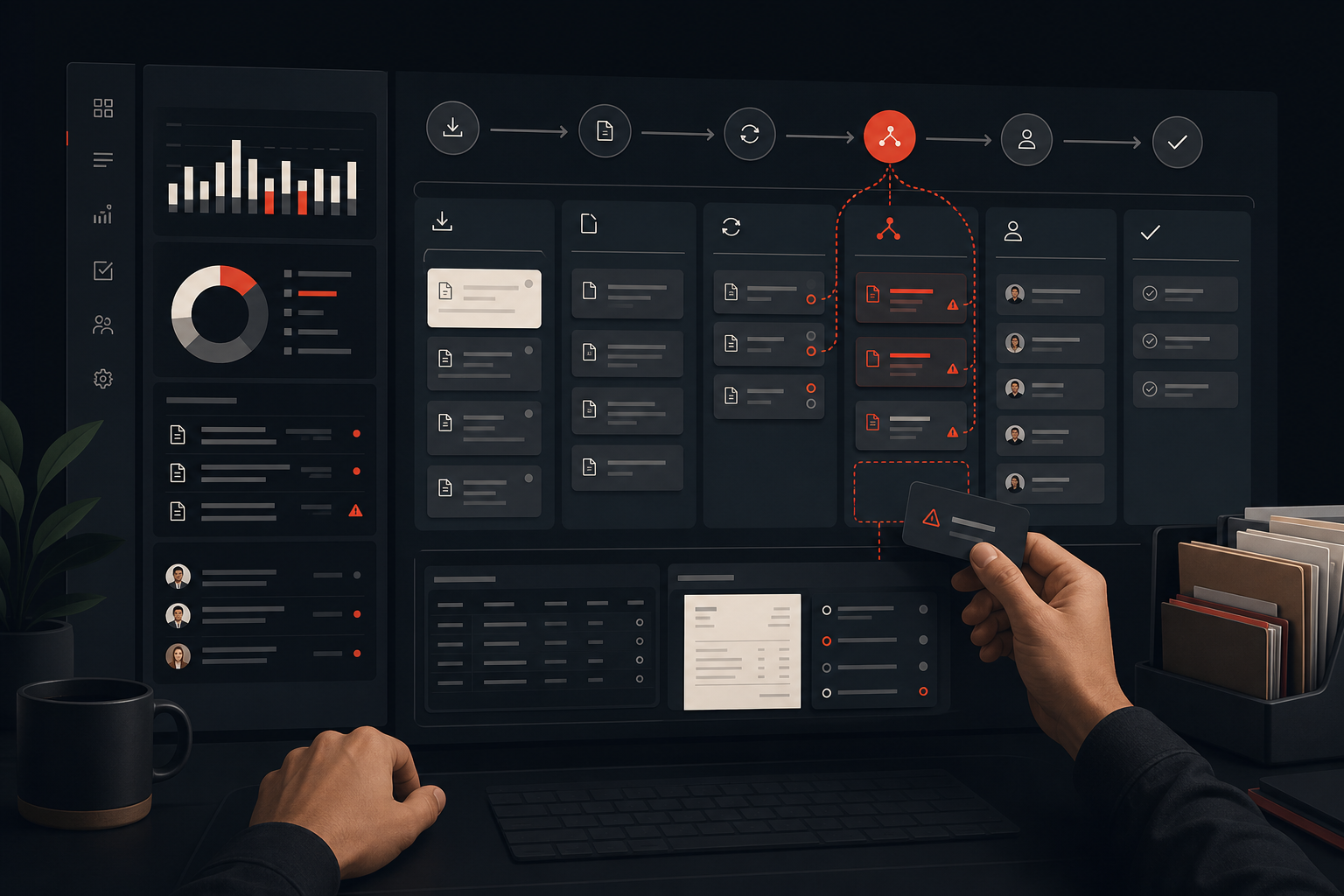
25 AI Tips to Help Bookkeeping Firms Remove Common Bottlenecks Without Losing Control
25 practical AI workflow tips for bookkeeping firms to reduce document chasing, review drag, reconciliation bottlenecks, and month-end close friction without losing human control.
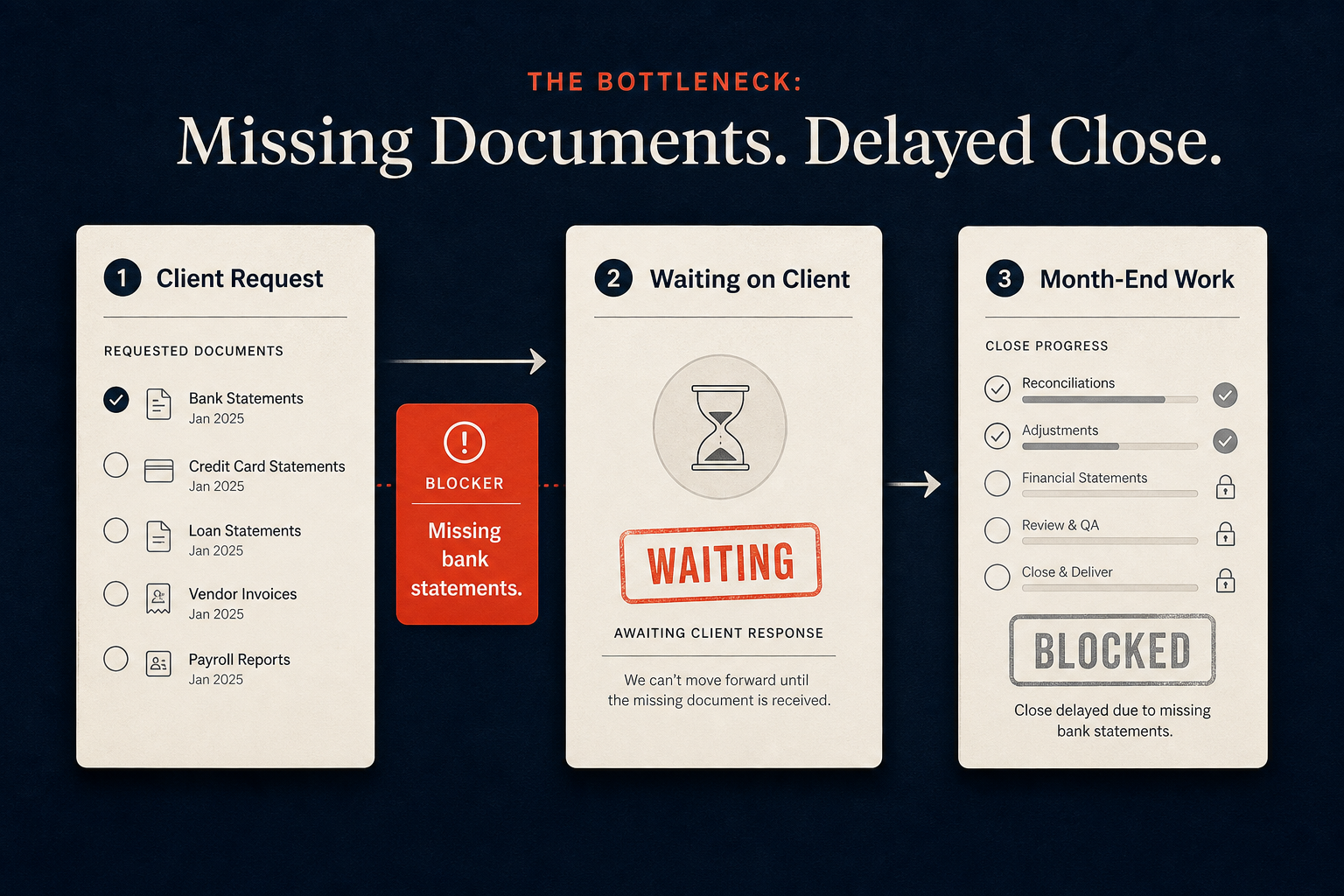
Why Client Document Chasing Breaks Bookkeeping Teams
Client document chasing is not just a reminder problem. See why bookkeeping teams need clearer request logic, status, ownership, and next action before AI or more tools can help.
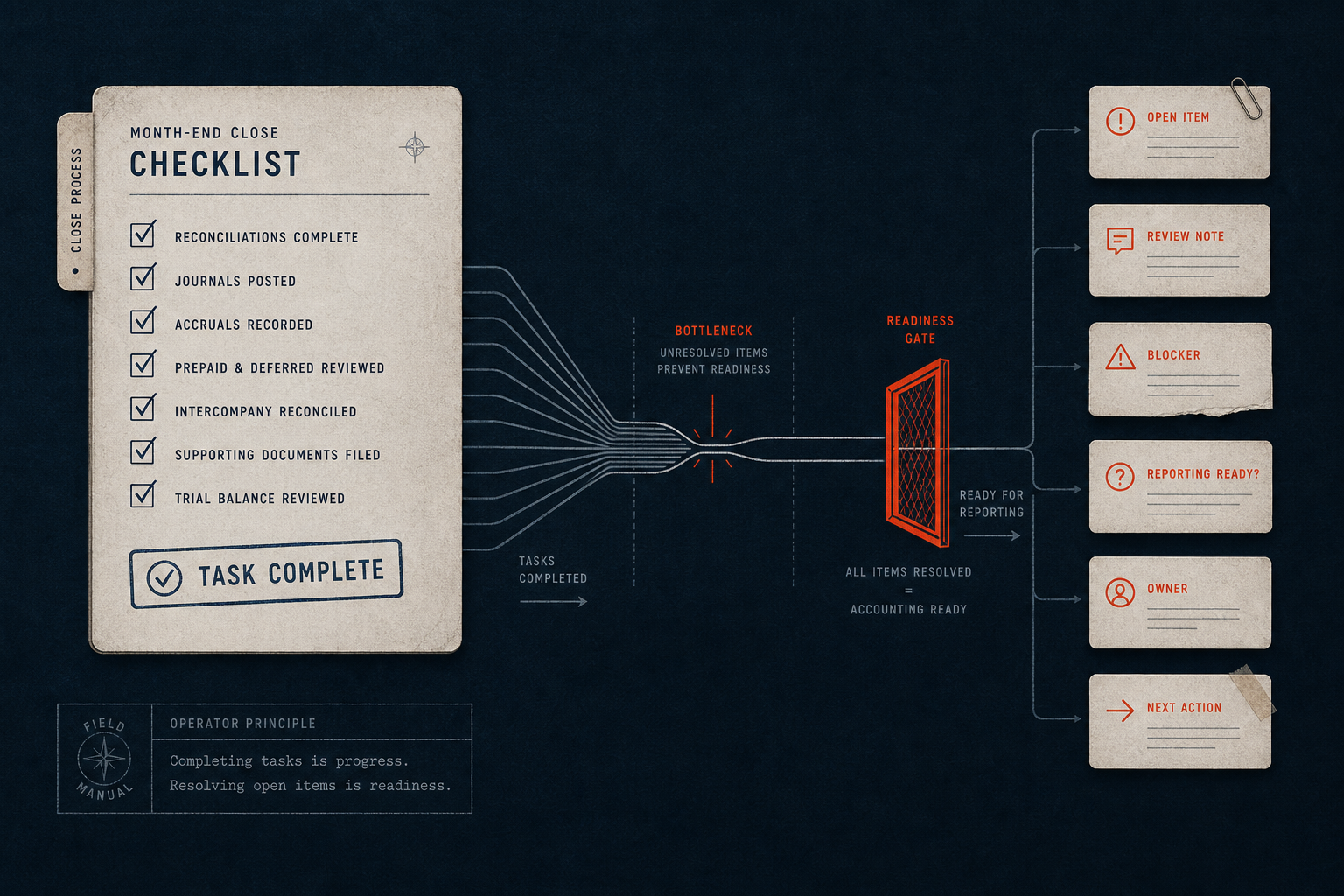
Why Month-End Close Drags Even When the Books Are Mostly Done
Month-end close often drags because task completion is not the same as accounting readiness. Learn what close workflows need before more checklists, staff, or AI can help.
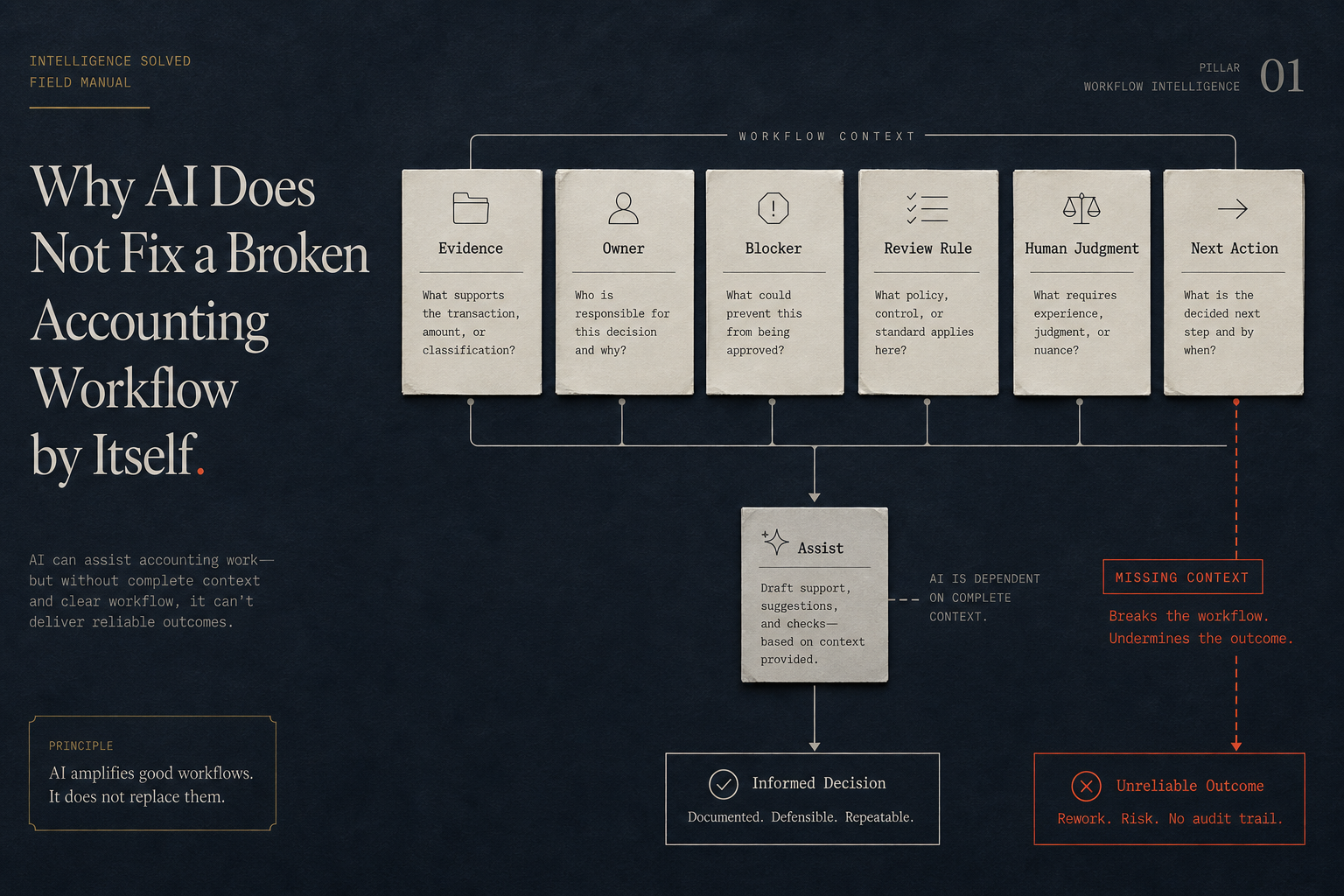
Why AI Does Not Fix a Broken Accounting Workflow by Itself
AI cannot fix a broken accounting workflow by itself. Before prompts, automations, or another dashboard help, the firm needs clear workflow context and human review rules.