AI Workflow Maintenance for Accounting Firms: Keep the Workflow From Failing Quietly
The form changed. The reviewer changed. The exception that happened once a month now owns the morning. The workflow is still “live,” but the team is working around it again. AI workflow maintenance keeps the installed process observable, reviewable, and governed as the work changes.
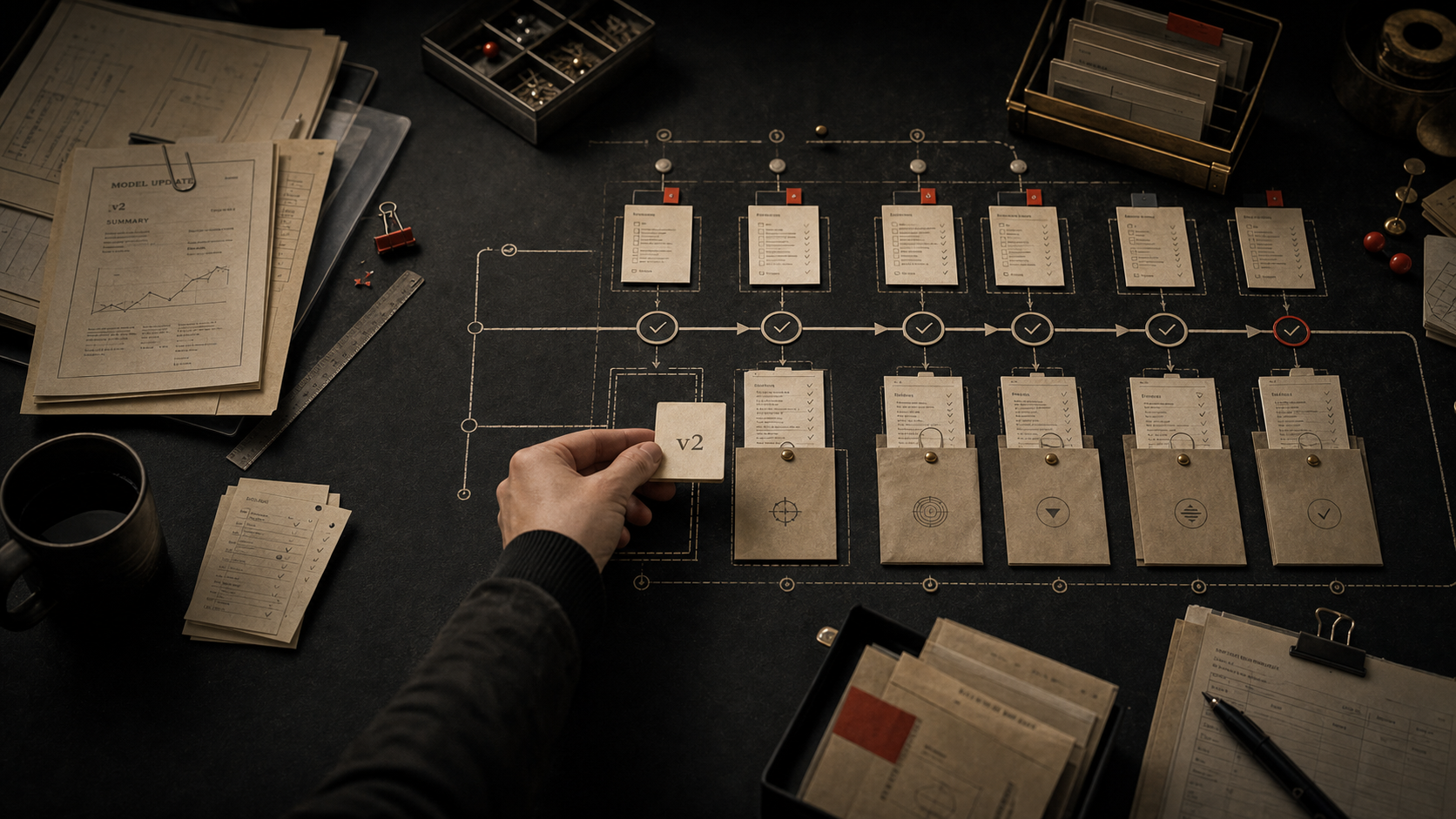
Check the input, the owner, the review standard, and the exception path. If nobody can tell you which one changed, the workflow is already losing observability.
The danger is not only a dramatic outage. It is a small field change, stale rule, or new exception that turns yesterday’s shortcut into today’s review fire.
The workflow did not break all at once. The workarounds came back one by one.
A form gains a field. A client portal changes its export. A reviewer takes on a new book of business. An exception that used to be rare becomes routine. The team adapts, but the workflow record does not.
That is why workflow automation support for accounting firms is a control problem. The team needs to know what changed, whether the old assumption still holds, and who can approve the next version. When the failure is a missing handoff between tools, see the AI workflow integration for accounting firms path.
What should become visible sooner?
- Inputs that no longer match the installed rule.
- Exceptions that repeat instead of resolving.
- Owners and escalation paths that changed.
- Review notes that no longer explain the decision.
- Changes that should be kept, revised, or reversed.
A four-part maintenance check before the workaround becomes policy
Run this against one installed workflow. It gives the operator a small, repeatable way to see whether the system still matches the work.
What does the workflow say is happening, and what is the team actually doing?
What keeps happening outside the intended path, and how often is it returning?
Who can review the change and decide whether the workflow boundary should move?
Does the updated workflow handle the messy case without hiding uncertainty?
Governed iteration, not silent drift
We keep one installed workflow observable as inputs, owners, tools, and exceptions change. That means capturing what failed, making the decision owner visible, and testing the next version before the workaround becomes invisible behavior.
- Monitor the states and handoffs that matter
- Capture recurring exceptions for review
- Keep ownership and escalation current
- Use evidence before expanding the workflow
Make the input, system, or responsibility change visible.
Catches drift earlierTurn a workaround into an observable exception instead of tribal knowledge.
Improves review qualityKeep human judgment explicit when the workflow cannot safely infer the answer.
Protects trustRecord what changed and what the operator should watch next.
Reduces silent regressionsBuilt for the moment after the first workflow looks successful.
The authority is knowing that accounting work changes under deadline. A useful maintenance practice makes those changes legible before the client, the close, or the reviewer becomes the monitoring system.
The exception that is harmless in a quiet month can become the work that owns the close.
The team should see what changed, what is blocked, and who decides without asking the original builder.
Grounded in close deadlines, audit standards, and the need to keep operating judgment visible.
The goal is governed iteration and observable control, not a promise that workflows never need attention.
One workflow scope + install: $3,500 upfront.
The current package begins with one workflow scoped, installed, tested, and handed off in 21 days. Optional $1,500/mo support is for maintenance, tuning, and expansion after the first workflow is live enough to evaluate. Review the package before deciding whether the problem is maintenance or a new implementation.
Start with the workflow where small changes are already creating repeated review work.
- Bounded scope
- Visible exceptions and owners
- Tested operator handoff
Continue when the evidence says the first workflow deserves care or the next bottleneck is ready.
- Maintenance and tuning
- Change review
- Next workflow when earned
Questions worth answering before maintenance
Start with the observable failure. Maintenance may be the right boundary, or the evidence may show the workflow needs a new implementation scope.
No. The first package is fixed. Optional monthly support comes after the first workflow and is only useful when the next work is clear.
The accountable operator or firm owner remains responsible for review, confidentiality, exceptions, and changes to the workflow boundary.
Watch the states that matter, record recurring exceptions, and compare the installed path to the work people are actually doing.
Which small change is already making the team work around the workflow?
Review the price and package first. Then bring the installed workflow, the change that exposed it, and the failure you need to see sooner.